

ALL EFFICACY RESULTS
MG-ADL
Adults taking RYSTIGGO experienced statistically significant and clinically meaningful improvements in activities of daily living at Week 61,2†
Primary endpoint: Change from baseline to Week 6 (Day 43) in MG-ADL total score in adults who are anti-AChR Ab+ or anti-MuSK Ab+1-3‡
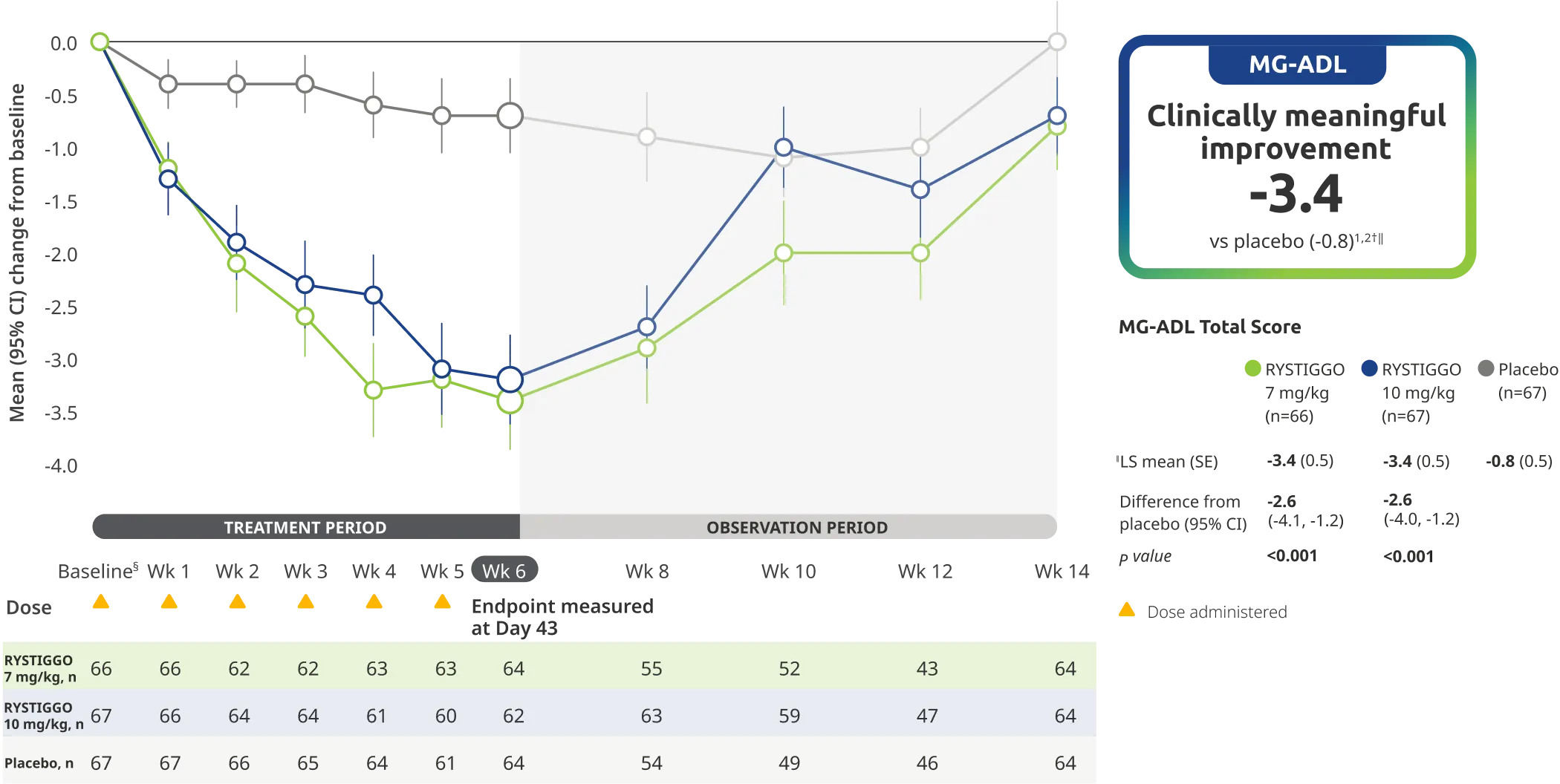
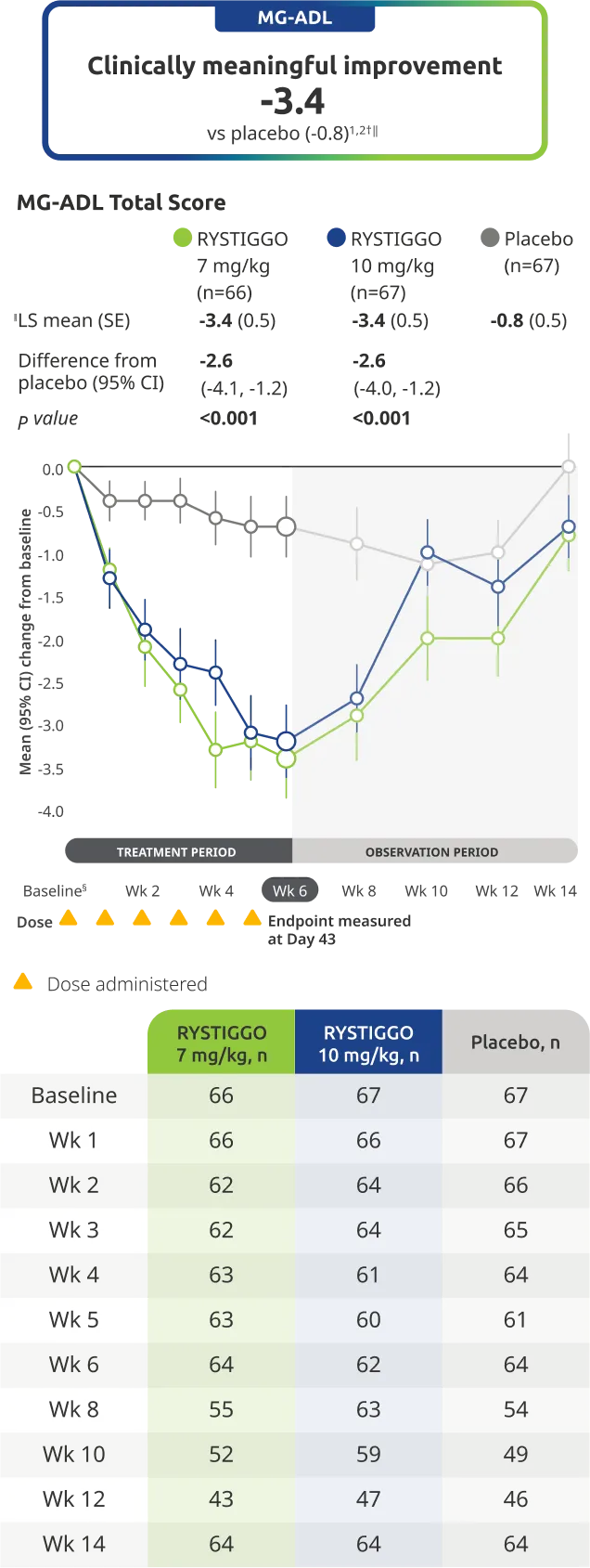
Clinically meaningful was established as a ≥2.0-point improvement in MG-ADL total score.2
During the treatment period, RYSTIGGO or placebo was administered subcutaneously once a week for 6 weeks.1
Treatment initiation on Day 1.2
Adults taking RYSTIGGO achieved maximum efficacy at Week 6 (Day 43).1
The efficacy of RYSTIGGO for the treatment of adults with anti-AChR Ab+ and anti-MuSK Ab+ gMG was established in an up to 18-week, multicenter, randomized, double-blind, placebo-controlled study. In the study, 200 patients were randomized 1:1:1 to receive weight-tiered doses of RYSTIGGO (n=133), either 7 mg/kg of RYSTIGGO (n=66) or 10 mg/kg of RYSTIGGO (n=67), or placebo (n=67). The study included a 4-week screening period and a 6-week treatment period followed by 8 weeks of observation.1
MG-ADL assesses the impact of gMG on daily functions of 8 symptoms on a scale of 0-3, with total scores ranging from 0-24. Higher scores are interpreted as greater impairments. An improvement of ≥2.0 points was established as clinically meaningful.1,2
Measures include4:
- Voice/speech problems
- Chewing
- Swallowing
- Breathing
- Brushing teeth and/or combing hair
- Rising from a chair
- Diplopia
- Eyelid droop
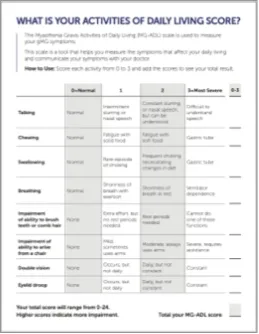
Have your patients monitor their progress with the MG-ADL guide
MG-ADL Responder Rate
Proportion of MG-ADL responders from baseline at Week 62
Secondary endpoint: MG-ADL responder rate
Adults with a ≥2.0-point reduction in MG-ADL total score from baseline at Week 6 (Day 43)2
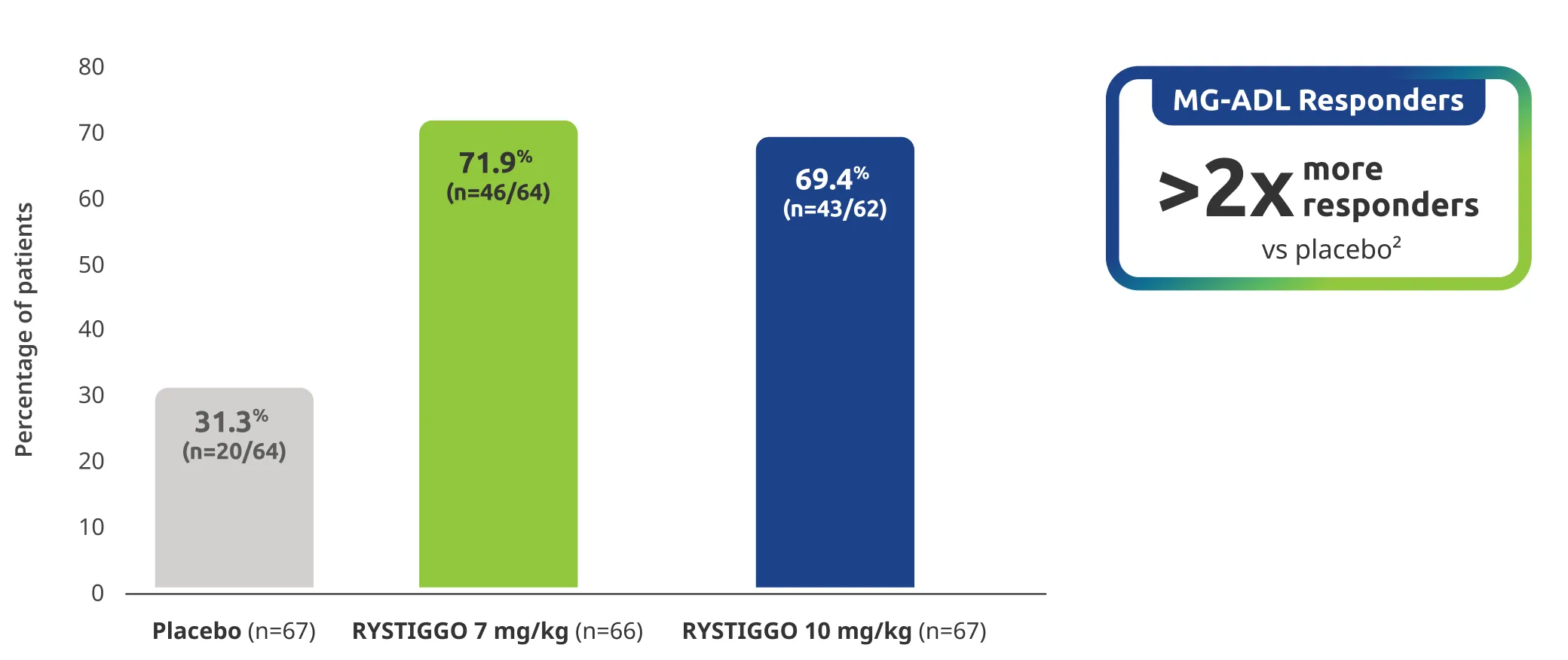
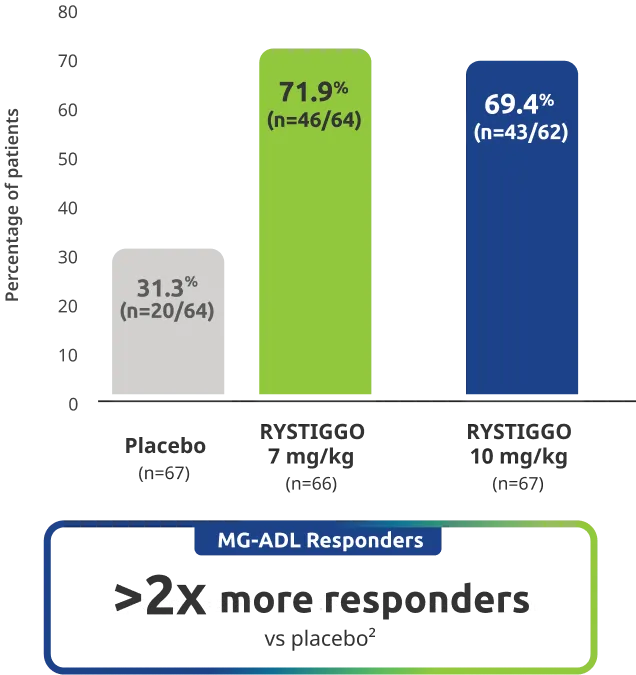
Study limitations: MG-ADL responder rate was a prespecified secondary endpoint not controlled for multiplicity; therefore, data should be interpreted with caution and conclusions cannot be drawn.
MINIMAL SYMPTOM EXPRESSION (MSE)
MSE rates observed during the pivotal study2
Other efficacy endpoint: Proportion of adults achieving MSE during treatment in the pivotal study2¶
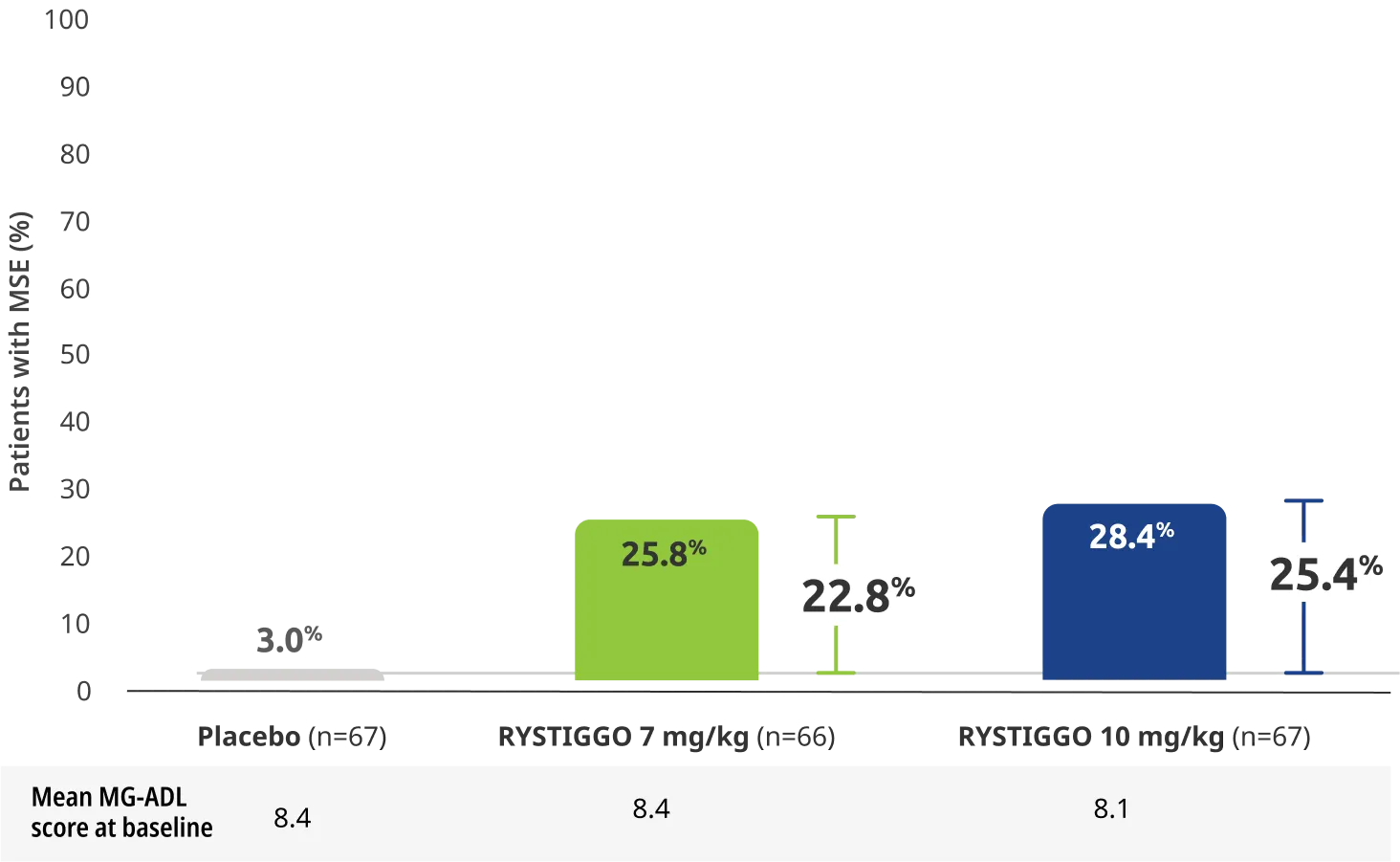
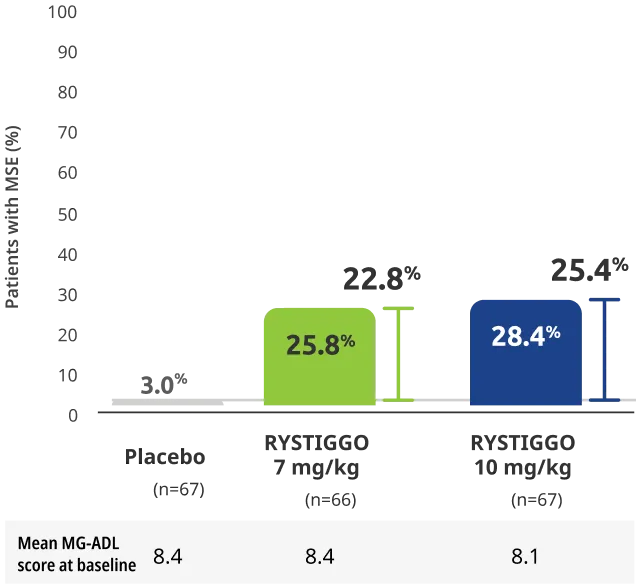
MSE was an exploratory endpoint and not controlled for multiplicity. Therefore, data should be interpreted with caution and conclusions cannot be drawn.
MSE was defined as an MG-ADL total score of 0 or 1 at any time up to and including Week 6 (Day 43) of the pivotal study.2

Review the RYSTIGGO MG-ADL results and MSE rates with a gMG expert

Ab+=antibody positive; AChR=acetylcholine receptor; CI=confidence interval; gMG=generalized myasthenia gravis; IgG=immunoglobulin G; LS=least squares; MG‑ADL=Myasthenia Gravis Activities of Daily Living; MGC=Myasthenia Gravis Composite; MGSPRO=Myasthenia Gravis Symptoms Patient-Reported Outcome; MuSK=muscle-specific tyrosine kinase; QMG=Quantitative Myasthenia Gravis; SE=standard error.
References:
- RYSTIGGO [Prescribing Information]. Smyrna, GA: UCB, Inc.
- Bril V, Drużdż A, Grosskreutz J, et al. Safety and efficacy of rozanolixizumab in patients with generalised myasthenia gravis (MycarinG): a randomised, double-blind, placebo-controlled, adaptive phase 3 study. Lancet Neurol. 2023;22(5):383-394. doi:10.1016/S1474-4422(23)00077-7
- Data on file. UCB, Inc., Smyrna, GA.
- MG activities of daily living (MG-ADL) profile. Myasthenia Gravis Foundation of America. 1997. Accessed July 20, 2026. https://myasthenia.org/Portals/0/ADL.pdf
The efficacy of RYSTIGGO for the treatment of adults with anti-AChR Ab+ and anti-MuSK Ab+ gMG was established in an up to 18-week, multicenter, randomized, double-blind, placebo-controlled study. In the study, 200 patients were randomized 1:1:1 to receive weight-tiered doses of RYSTIGGO (n=133), either 7 mg/kg of RYSTIGGO (n=66) or 10 mg/kg of RYSTIGGO (n=67), or placebo (n=67).1
QUANTITATIVE MYASTHENIA GRAVIS (QMG)
Adults taking RYSTIGGO experienced statistically significant and clinically meaningful improvements in QMG score vs placebo at Week 61,2
Secondary endpoint: Mean change in QMG score from baseline to Week 6 (Day 43)1,2
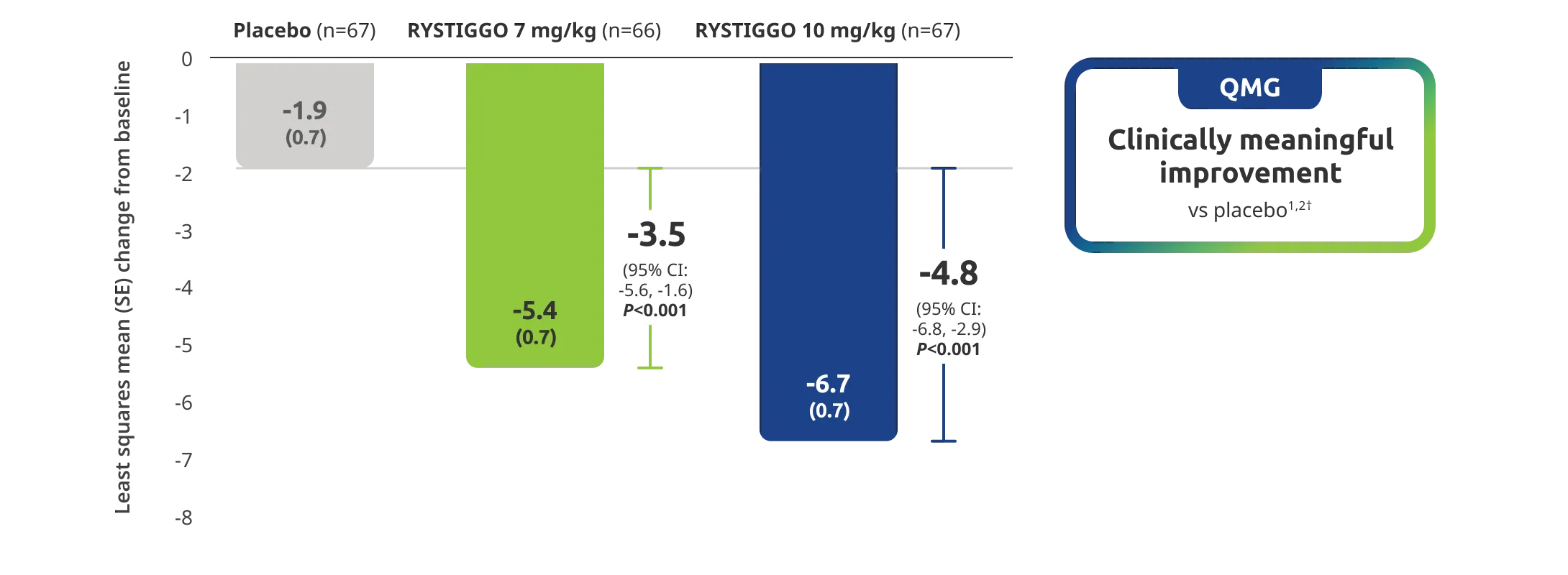
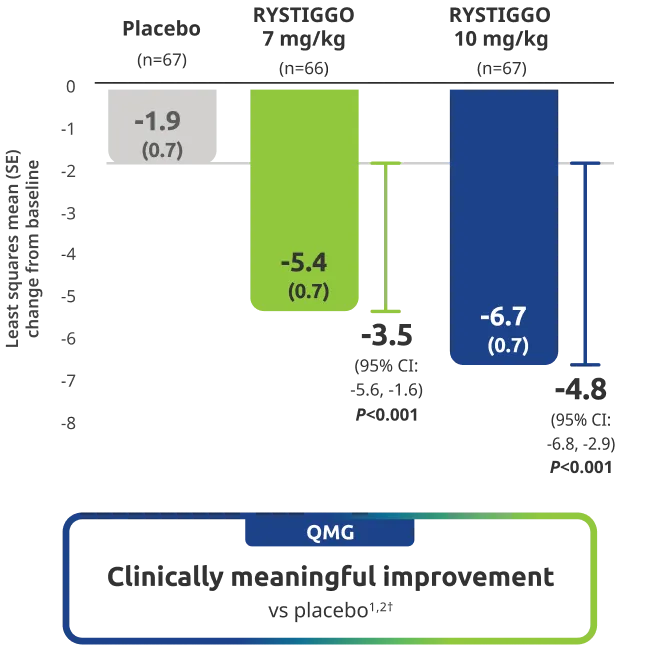
Improvements of ≥3.0 points were established as clinically meaningful.2
QMG is a physician assessment scoring system that quantifies disease severity. Measures are assessed on a scale of 0-3, with total scores ranging from 0-39. An improvement of ≥3.0 points was established as clinically meaningful.1-3
Measures include3:
- Ptosis
- Facial muscle weakness
- Dysarthria
- Grip strength
- Neck flexion endurance
- Diplopia
- Difficulty swallowing 4 oz of water
- Percent predicted forced vital capacity
- Arm and leg endurance
MYASTHENIA GRAVIS COMPOSITE (MGC)
Adults taking RYSTIGGO experienced statistically significant and clinically meaningful improvements in MGC score vs placebo at Week 62,4
Secondary endpoint: Mean change in MGC score from baseline to Week 6 (Day 43)2,4
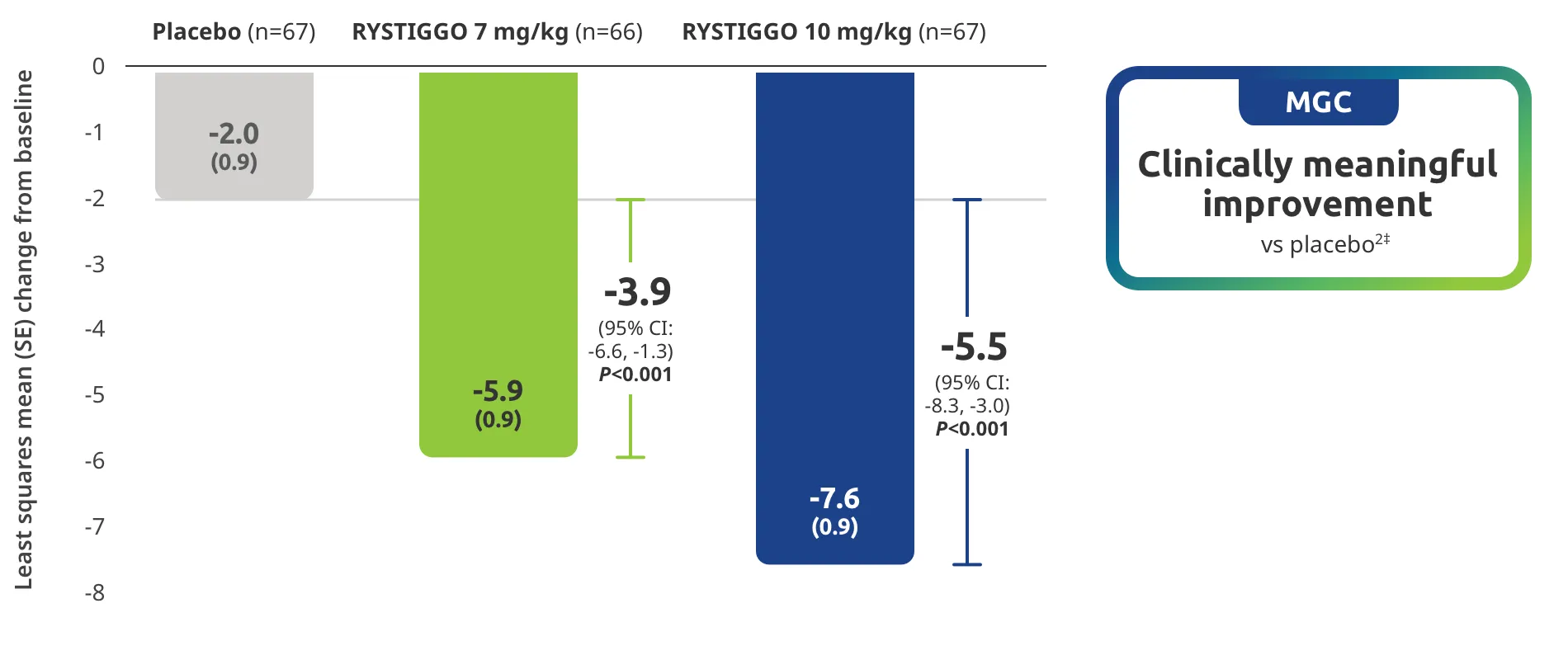
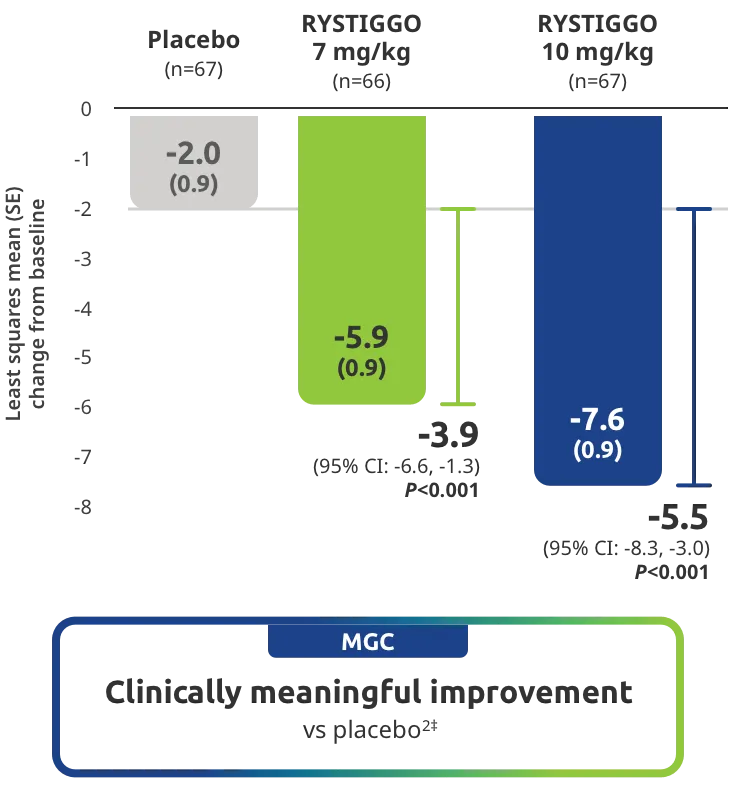
Improvements of ≥3.0 points were established as clinically meaningful.2
MGC is a 10-item patient and physician assessment of the signs and symptoms of myasthenia gravis based on exam and patient history, with total scores ranging from 0-50. Higher scores are interpreted as greater impairments. An improvement of ≥3.0 points was established as clinically meaningful.2,5,6
Measures include5:
- Ptosis
- Eye closure
- Chewing
- Breathing
- Shoulder abduction
- Diplopia
- Talking
- Swallowing
- Neck flexion or extension
- Hip flexion

Watch a leading expert in gMG review the RYSTIGGO secondary endpoint results
Ab+=antibody positive; AChR=acetylcholine receptor; CI=confidence interval; gMG=generalized myasthenia gravis; IgG=immunoglobulin G; MG-ADL=Myasthenia Gravis Activities of Daily Living; MGSPRO=Myasthenia Gravis Symptoms Patient-Reported Outcome; MuSK=muscle-specific tyrosine kinase; SE=standard error.
References:
- RYSTIGGO [Prescribing Information]. Smyrna, GA: UCB, Inc.
- Bril V, Drużdż A, Grosskreutz J, et al. Safety and efficacy of rozanolixizumab in patients with generalised myasthenia gravis (MycarinG): a randomised, double-blind, placebo-controlled, adaptive phase 3 study. Lancet Neurol. 2023;22(5):383-394. doi:10.1016/S1474-4422(23)00077-7
- QMG form. Myasthenia Gravis Foundation of America. 1997. Accessed July 20, 2026. https://myasthenia.org/Portals/0/QMG.pdf
- Data on file. UCB, Inc., Smyrna, GA.
- MG composite scale. Myasthenia Gravis Foundation of America. 2012. Accessed July 20, 2026. https://myasthenia.org/Portals/0/MG%20composite%20score.pdf
- Regnault A, Morel T, de la Loge C, et al. Measuring overall severity of myasthenia gravis (MG): evidence for the added value of the MG Symptoms PRO. Neurol Ther. 2023;12(5):1573-1590. doi:10.1007/s40120-023-00464-x
The efficacy of RYSTIGGO for the treatment of adults with anti-AChR Ab+ and anti-MuSK Ab+ gMG was established in an up to 18-week, multicenter, randomized, double-blind, placebo-controlled study. In the study, 200 patients were randomized 1:1:1 to receive weight-tiered doses of RYSTIGGO (n=133), either 7 mg/kg of RYSTIGGO (n=66) or 10 mg/kg of RYSTIGGO (n=67), or placebo (n=67).1
MYASTHENIA GRAVIS SYMPTOMS PATIENT-REPORTED OUTCOME (MG SYMPTOMS PRO)
Improvement in muscle weakness fatigability demonstrated in adults taking RYSTIGGO at Week 62,3
Secondary endpoint: Mean change in MG Symptoms PRO muscle weakness fatigability score from baseline to Week 6 (Day 43)2,3
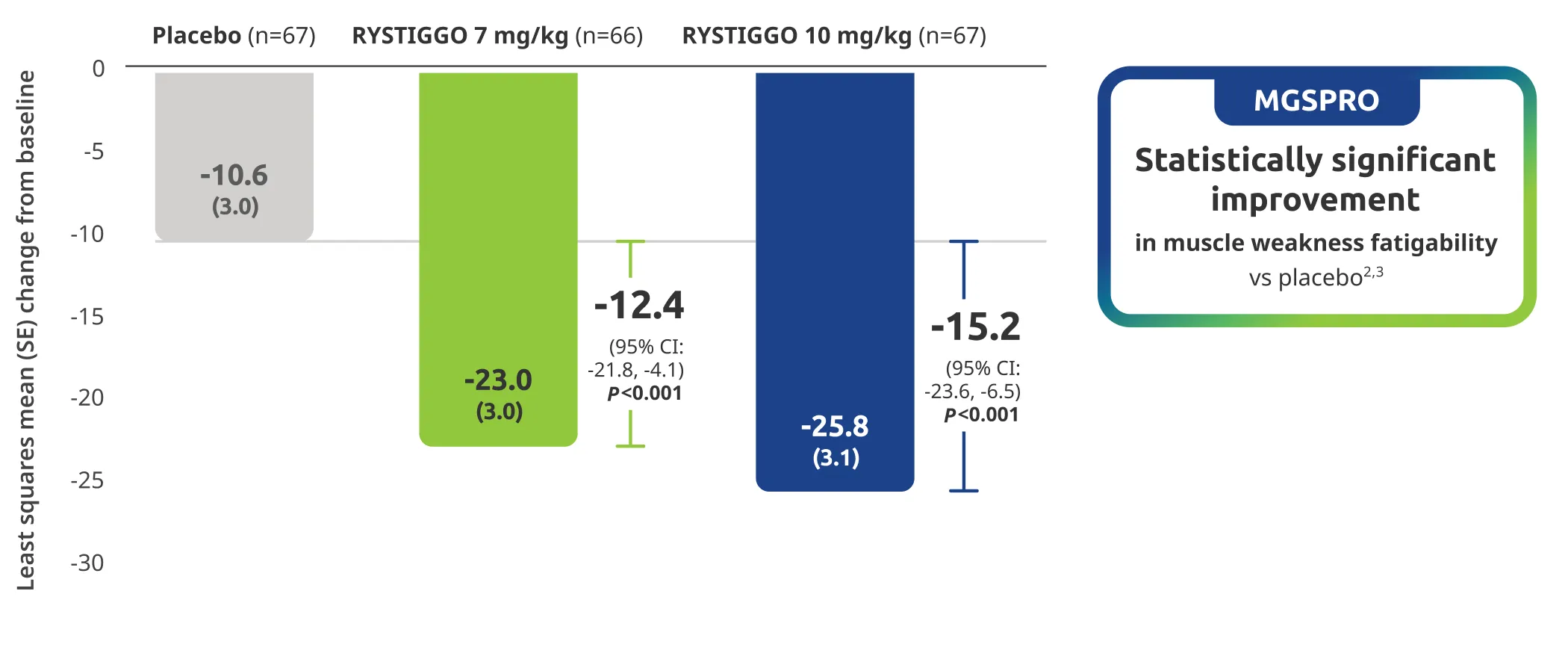
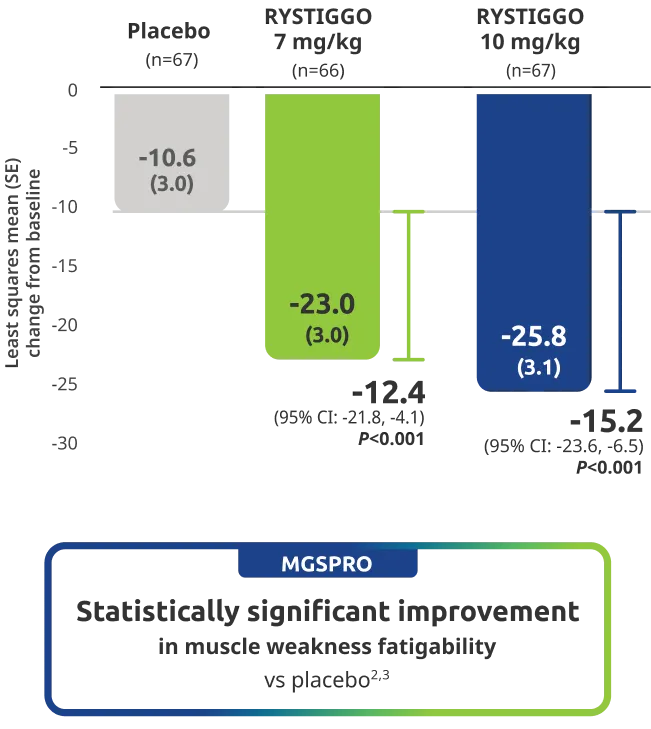
MG Symptoms PRO was part of the planned efficacy analysis; however, efficacy or clinical significance should be interpreted with caution.
Improvement in physical fatigue demonstrated in adults taking RYSTIGGO at Week 62,3
Secondary endpoint: Mean change in MG Symptoms PRO physical fatigue score from baseline to Week 6 (Day 43)2,3
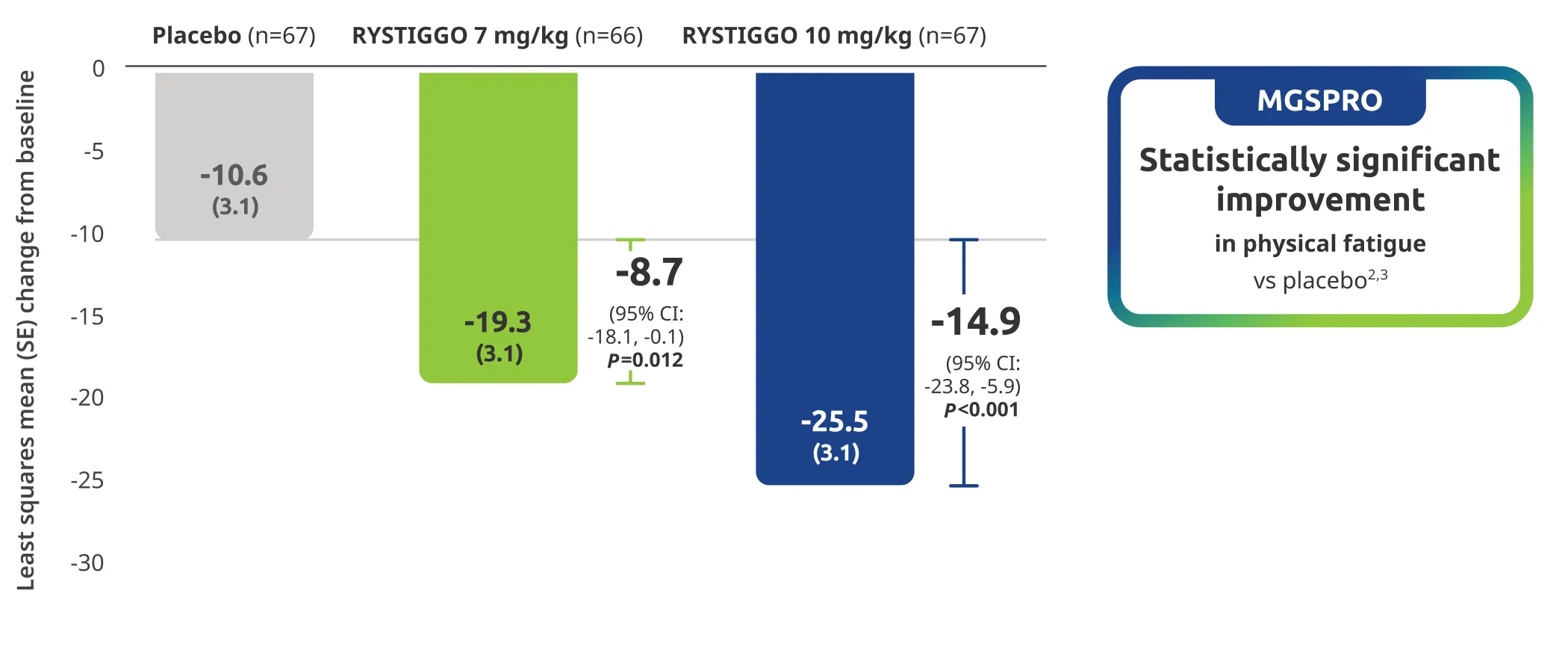
MG Symptoms PRO was part of the planned efficacy analysis; however, efficacy or clinical significance should be interpreted with caution.
Improvement in bulbar muscle weakness demonstrated in adults taking RYSTIGGO at Week 62,3
Secondary endpoint: Mean change in MG Symptoms PRO bulbar muscle weakness score from baseline to Week 6 (Day 43)2,3
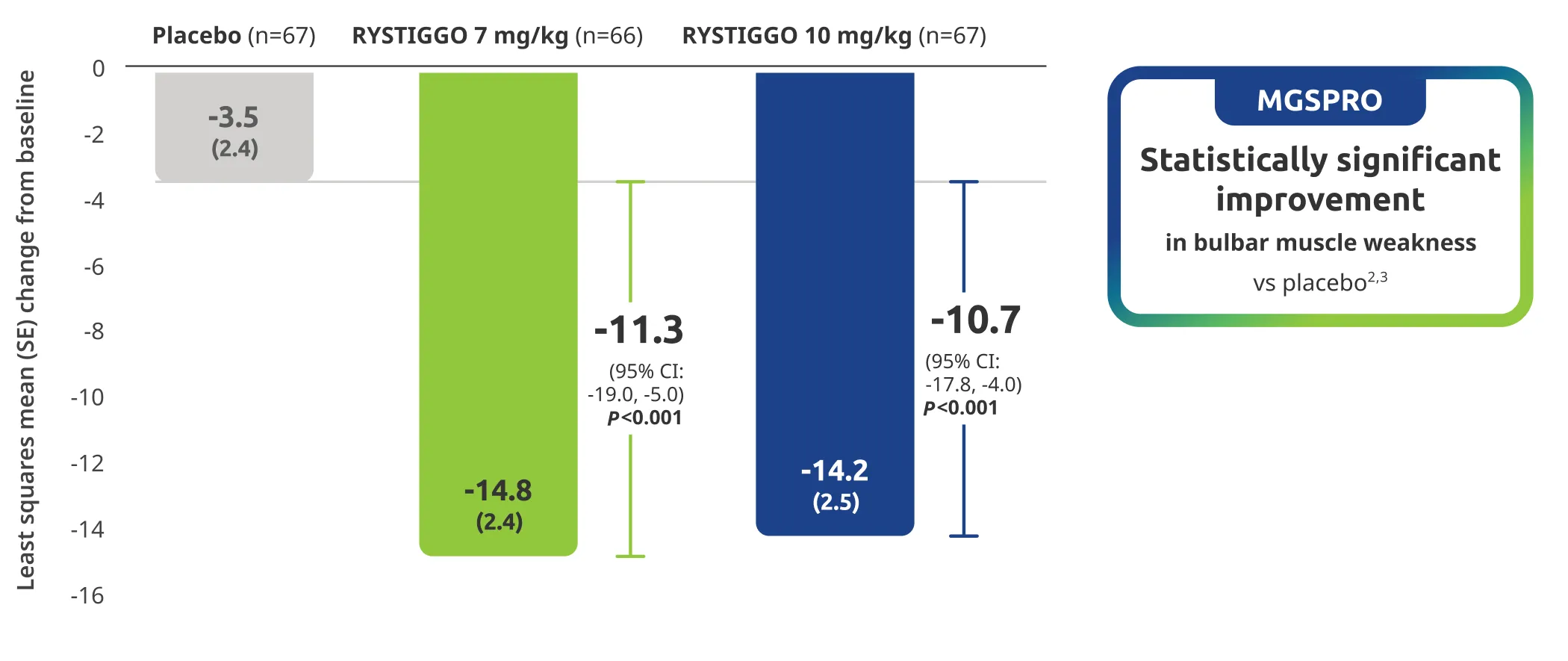
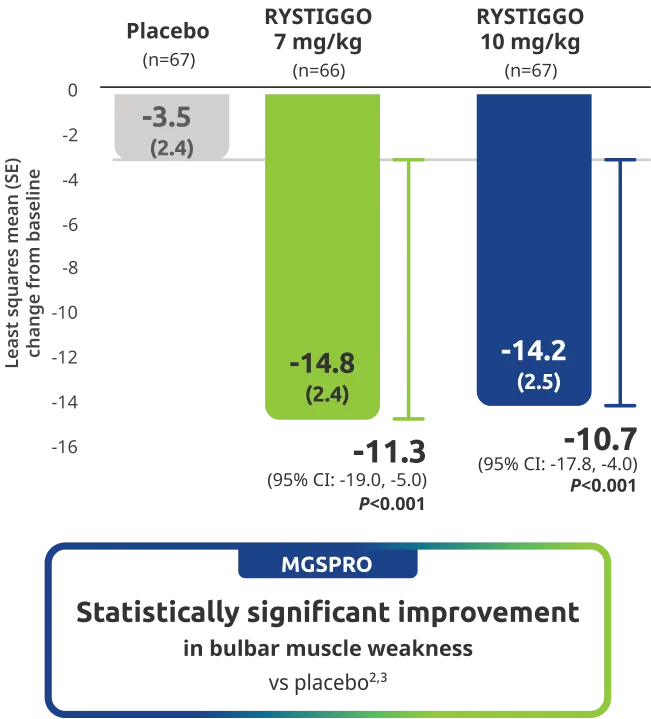
MG Symptoms PRO was part of the planned efficacy analysis; however, efficacy or clinical significance should be interpreted with caution.
Change in ocular muscle weakness in adults taking RYSTIGGO at Week 6 (post hoc analysis)2,4
Post hoc analysis: Mean change in MG Symptoms PRO ocular muscle weakness score from baseline to Week 6 (Day 43)2,4,5†‡
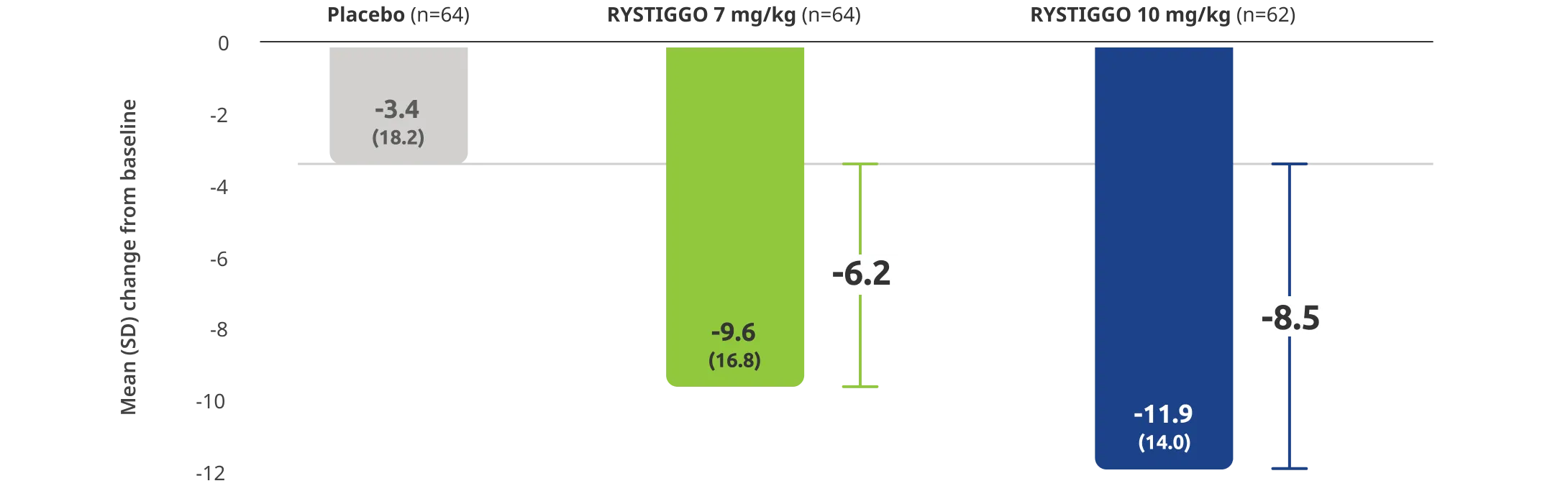
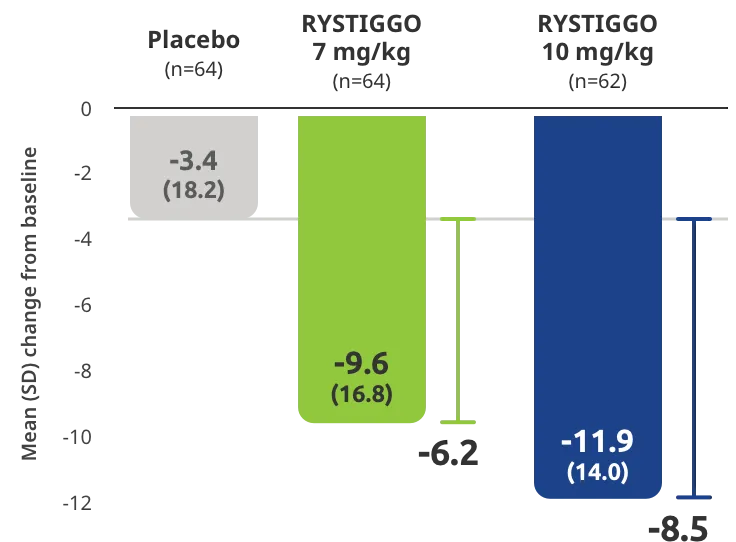
This data was from a post hoc analysis not controlled for multiplicity and not powered; therefore, data should be interpreted with caution and conclusions cannot be drawn.
Questionnaire completion rates at Day 43 were 92.5–97.0% for the MG Symptoms PRO ocular muscle weakness scale. The sum of responses to the items composing each scale undergoes linear transformation to generate a score of 0–100.4
The MG Symptoms PRO consists of 42 items across 5 scales: ocular symptoms, bulbar symptoms, respiratory symptoms, physical fatigue, and muscle weakness fatigability. Only muscle weakness fatigability, physical fatigue, and bulbar muscle weakness were assessed as secondary endpoints in the pivotal study.2,6
MG SYMPTOMS PRO OUTCOME MEASURE
MG Symptoms PRO is a novel outcome measure developed by UCB and used in the RYSTIGGO clinical trials. It complements established clinical outcome measures and is the first outcome measure to include a standalone assessment of physical fatigue.2,6,7
MG Symptoms PRO is a patient assessment evaluating the symptom severity of myasthenia gravis. Symptoms are measured over a 7-day period. A score ranging from 0-100 is calculated for each subscale, with a higher score indicating greater symptom severity.6
MG Symptoms PRO evaluates2,6§:
Muscle weakness fatigability
A scale that measures muscle fatigability by assessing use-induced reduction in the ability of the following muscles to function:
- Proximal
- Ocular
- Bulbar
- Respiratory
Physical fatigue
A scale that measures the symptoms/manifestations of physical fatigue, including:
- Body and limb muscle weakness
- Heaviness
- Lack of energy and strength
Bulbar muscle weakness
A scale that measures the symptoms/manifestations associated with bulbar muscle weakness, including:
- Facial/mouth drooping
- Speech and voice problems
- Difficulties with chewing and swallowing
- Liquid control in mouth
Ocular muscle weakness
A scale that measures the symptoms/manifestations associated with ocular muscle weakness, including:
- Blurry vision
- Double vision
- Eye movements
- Eyelid drooping
Only muscle weakness fatigability, physical fatigue, and bulbar muscle weakness were assessed as secondary endpoints in the pivotal study.2

Learn more about MG Symptoms PRO with a gMG expert
Ab+=antibody positive; AChR=acetylcholine receptor; CI=confidence interval; gMG=generalized myasthenia gravis; IgG=immunoglobulin G; MG-ADL=Myasthenia Gravis Activities of Daily Living; MGC=Myasthenia Gravis Composite; MGSPRO=Myasthenia Gravis Symptoms Patient-Reported Outcome; MuSK=muscle-specific tyrosine kinase; QMG=Quantitative Myasthenia Gravis; SD=standard deviation; SE=standard error.
References:
- RYSTIGGO [Prescribing Information]. Smyrna, GA: UCB, Inc.
- Bril V, Drużdż A, Grosskreutz J, et al. Safety and efficacy of rozanolixizumab in patients with generalised myasthenia gravis (MycarinG): a randomised, double-blind, placebo-controlled, adaptive phase 3 study. Lancet Neurol. 2023;22(5):383-394. doi:10.1016/S1474-4422(23)00077-7
- Data on file. UCB, Inc., Smyrna, GA.
- Habib AA, Pascuzzi RM, Vissing J, et al. Ocular symptoms in patients with generalised myasthenia gravis receiving rozanolixizumab: post hoc analysis of MycarinG. Presented at: ICNMD 2024; October 25-29, 2024; Perth, Australia. Presentation OS.07.04.
- Habib AA, Pascuzzi RM, Vissing J, et al. Ocular symptoms in patients with generalised myasthenia gravis receiving rozanolixizumab: post hoc analysis of MycarinG. Abstract presented at: ICNMD 2024; October 25-29, 2024; Perth, Australia. Presentation OS.07.04.
- Regnault A, Morel T, de la Loge C, et al. Measuring overall severity of myasthenia gravis (MG): evidence for the added value of the MG Symptoms PRO. Neurol Ther. 2023;12(5):1573-1590. doi:10.1007/s40120-023-00464-x
- Cleanthous S, Mork AC, Regnault A, et al. Development of the Myasthenia Gravis (MG) Symptoms PRO: a case study of a patient-centred outcome measure in rare disease. Orphanet J Rare Dis. 2021;16(1):1-14. doi:10.1186/s13023-021-02064-0
The efficacy of RYSTIGGO for the treatment of adults with anti-AChR Ab+ and anti-MuSK Ab+ gMG was established in an up to 18-week, multicenter, randomized, double-blind, placebo-controlled study. In the study, 200 patients were randomized 1:1:1 to receive weight-tiered doses of RYSTIGGO (n=133), either 7 mg/kg of RYSTIGGO (n=66) or 10 mg/kg of RYSTIGGO (n=67), or placebo (n=67).1
IgG LEVELS
Reduction in immunoglobulin G (IgG) levels at Week 61,2
A reduction in total IgG serum concentrations was observed in adults in both RYSTIGGO treatment groups.1
Other endpoint: Mean % change from baseline to Week 6 (Day 43) in total IgG level2
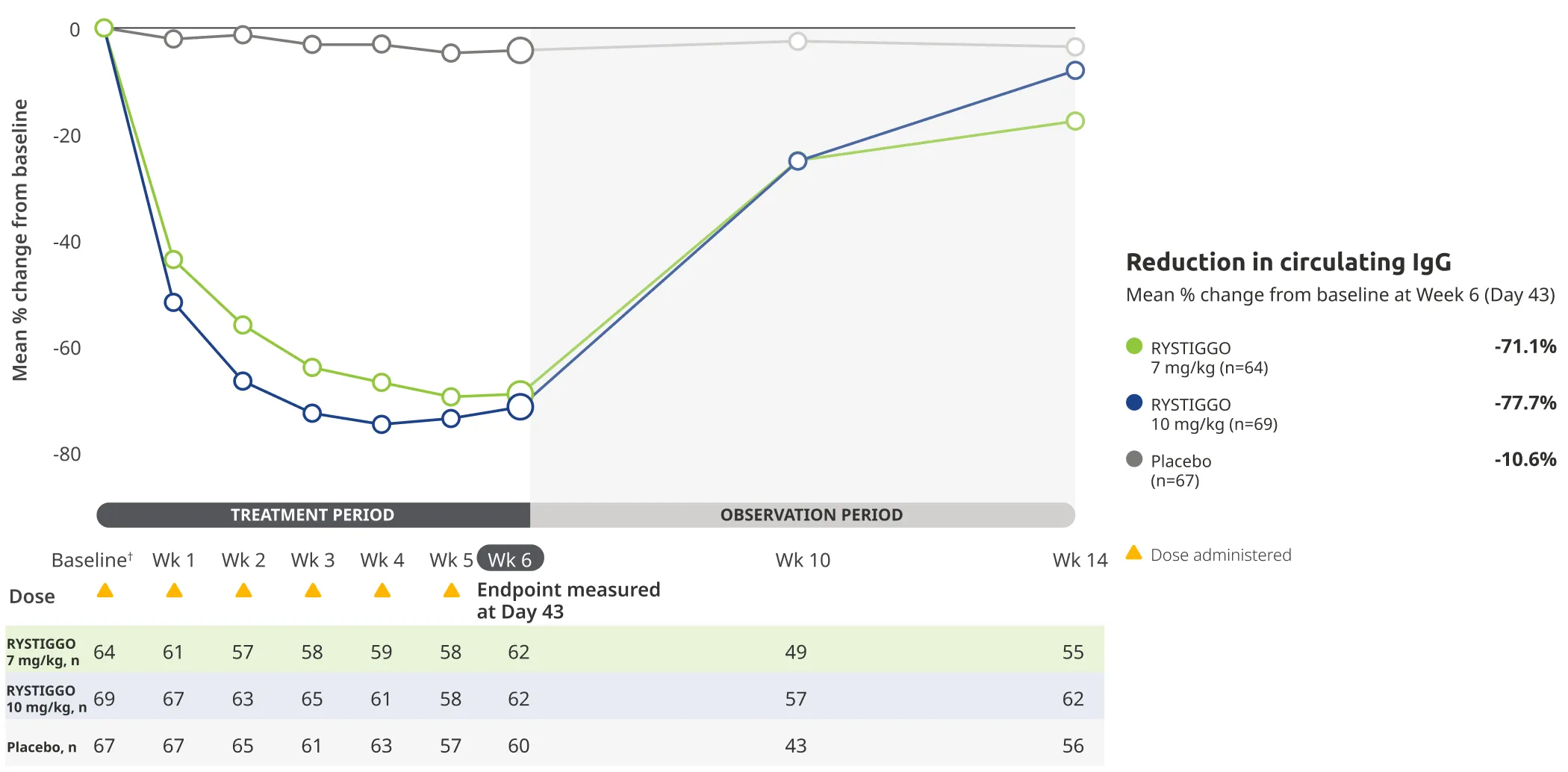
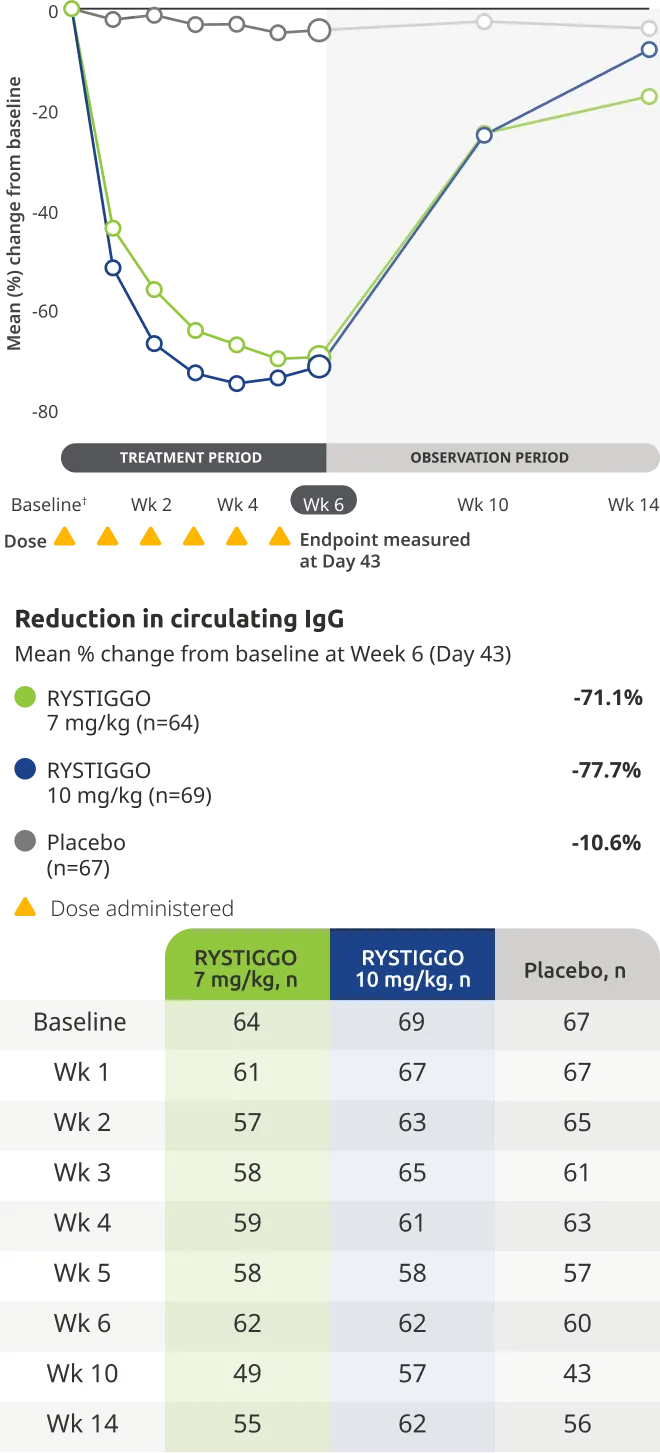
Study limitations: The pharmacological effect of RYSTIGGO was assessed by measuring the decrease in serum IgG levels; the clinical significance of this data has not been established.
Treatment initiation on Day 1.2
Ab+=antibody positive; AChR=acetylcholine receptor; gMG=generalized myasthenia gravis; MG-ADL=Myasthenia Gravis Activities of Daily Living; MGC=Myasthenia Gravis Composite; MGSPRO=Myasthenia Gravis Symptoms Patient-Reported Outcome; MuSK=muscle-specific tyrosine kinase; QMG=Quantitative Myasthenia Gravis.
References:
- RYSTIGGO [Prescribing Information]. Smyrna, GA: UCB, Inc.
- Data on file. UCB, Inc., Smyrna, GA.
Adults from MycarinG could enroll in two extension studies, MG0004 and MG0007, that further evaluated RYSTIGGO over time.3
The primary endpoints in the RYSTIGGO extension studies evaluated the proportion of patients experiencing treatment-emergent adverse events (TEAEs). The most common TEAEs (>10%) reported in adults receiving either dose of RYSTIGGO in the extension studies were headache, diarrhea, COVID-19, decreased blood immunoglobulin G, nausea, and pyrexia.4-6
MG-ADL SCORES IN EXTENSION STUDIES
MG-ADL scores across subsequent cycles of RYSTIGGO in the extension studies7
Secondary endpoint: MG-ADL total scores from baseline to Week 6 (Day 43) across each subsequent 6-week treatment cycle6,7†
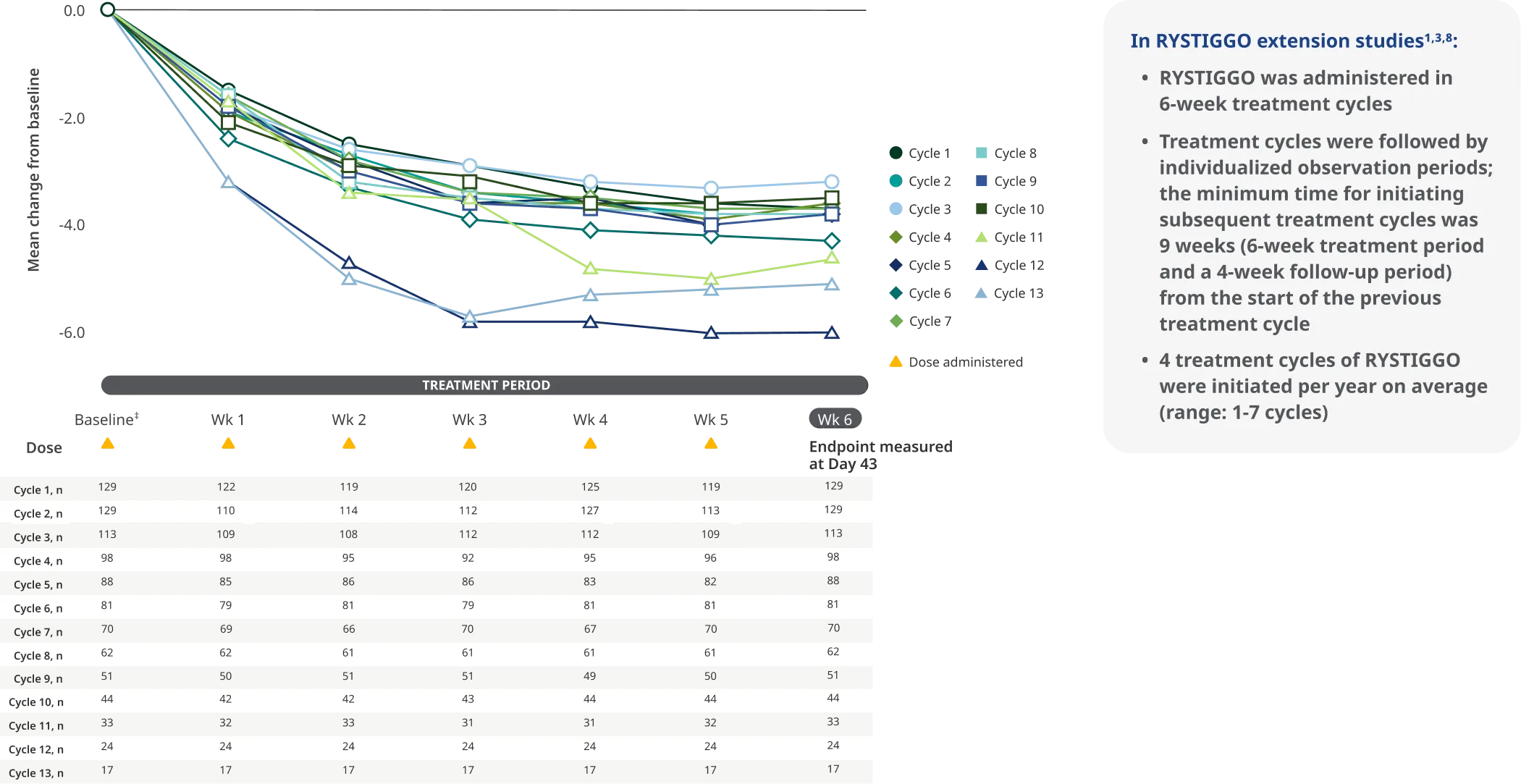
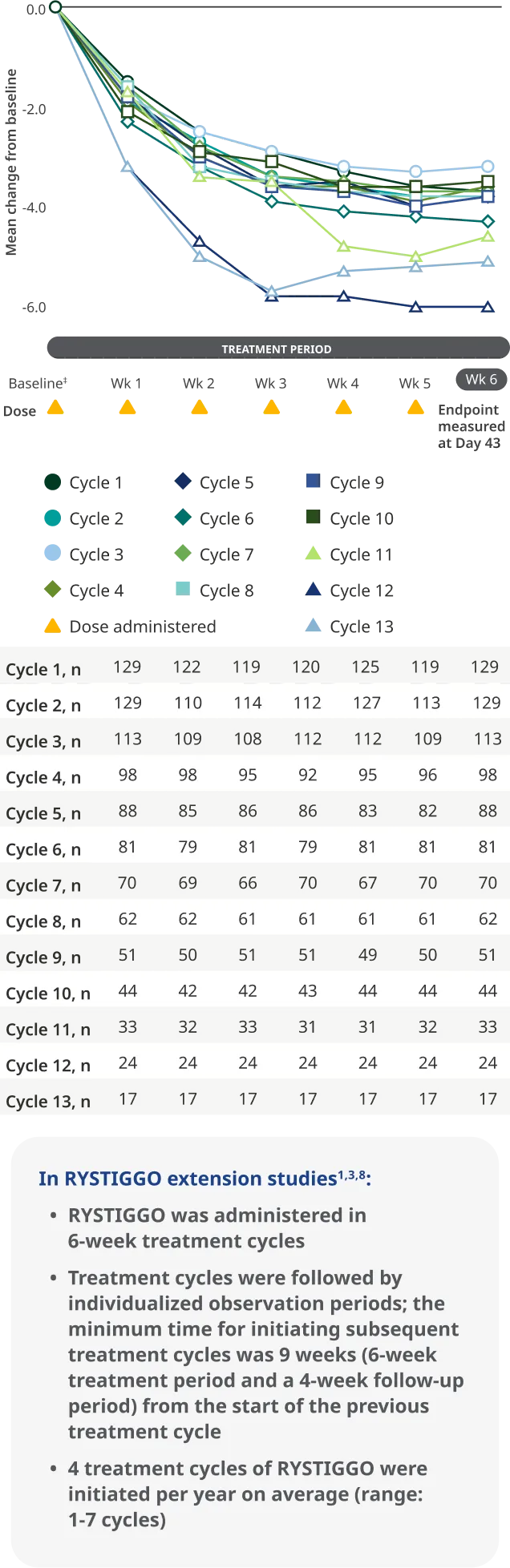
The most common adverse reactions being observed with repeated cyclic treatment were consistent with adverse reactions observed in the pivotal study1,6
The RYSTIGGO extension studies were open label and not placebo controlled; therefore, the efficacy and clinical significance of the results should be interpreted with caution.
Data were pooled across MycarinG, the first 6 weeks of MG0004, and MG0007 and combined for the 7 mg/kg and 10 mg/kg RYSTIGGO treatment groups.7
Treatment initiation on Day 1.3
MG-ADL assesses the impact of gMG on daily functions of 8 symptoms on a scale of 0-3, with total scores ranging from 0-24. Higher scores are interpreted as greater impairments. An improvement of ≥2.0 points was established as clinically meaningful.1,2
Measures include9:
- Voice/speech problems
- Chewing
- Swallowing
- Breathing
- Brushing teeth and/or combing hair
- Rising from a chair
- Diplopia
- Eyelid droop
MG-ADL RESPONDER RATES IN EXTENSION STUDIES
MG-ADL responder rates across subsequent cycles of RYSTIGGO in the extension studies10
Other efficacy endpoint: MG-ADL responder rates6,10§∥
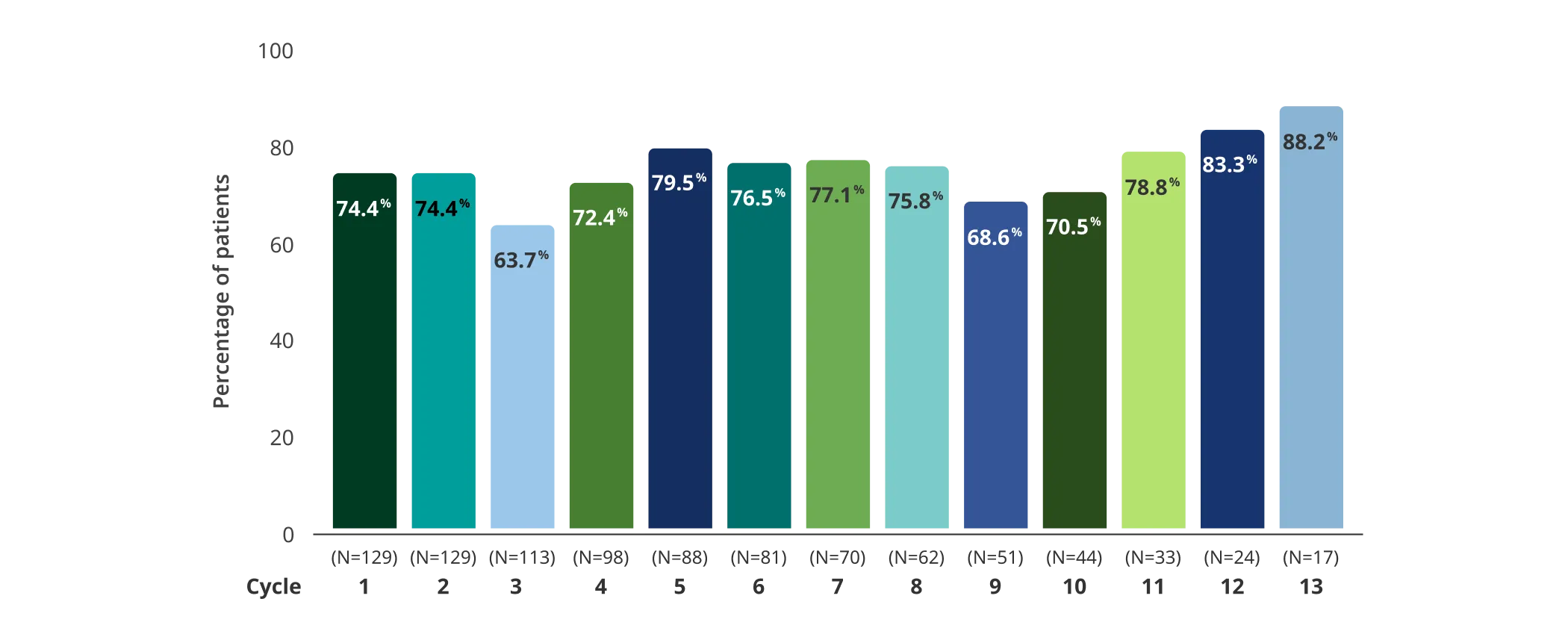
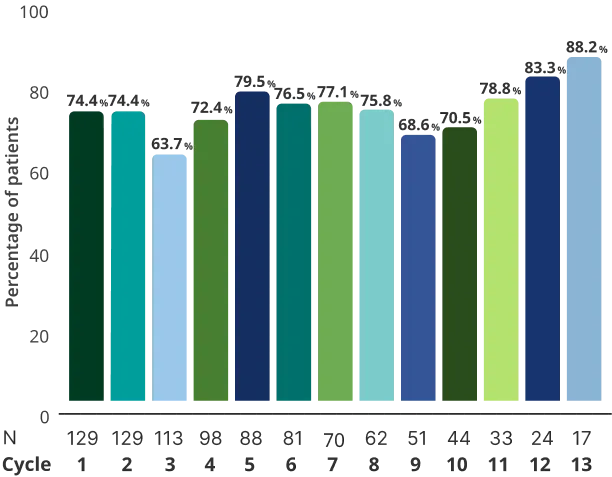
MG-ADL responder rate was defined as the proportion of adults with a ≥2.0-point reduction in MG-ADL total score from baseline at Week 6 (Day 43) without the use of rescue therapy.10
The RYSTIGGO extension studies were open label and not placebo controlled; therefore, the efficacy and clinical significance of the results should be interpreted with caution.
Data were pooled across MycarinG, the first 6 weeks of MG0004, and MG0007 and combined for the 7 mg/kg and 10 mg/kg RYSTIGGO treatment groups.10
N represents the number of adults who completed an MG-ADL assessment at Week 6 (Day 43) in each treatment cycle.10
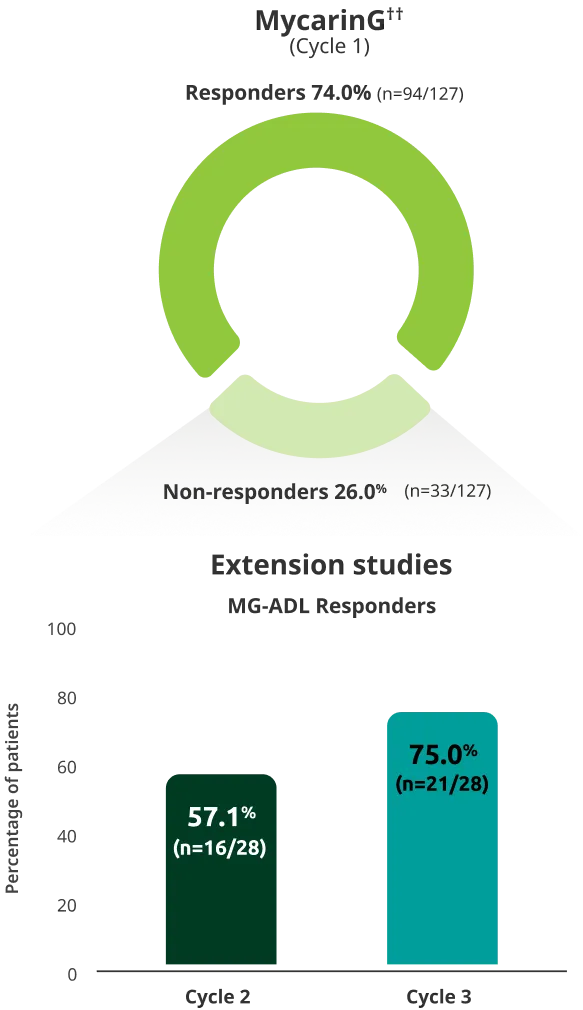
MG-ADL response rates in initial non-responders (post hoc analysis)11
Post hoc analysis: MG-ADL response rates after subsequent cycles of RYSTIGGO in adults who were initial non-responders11¶#**
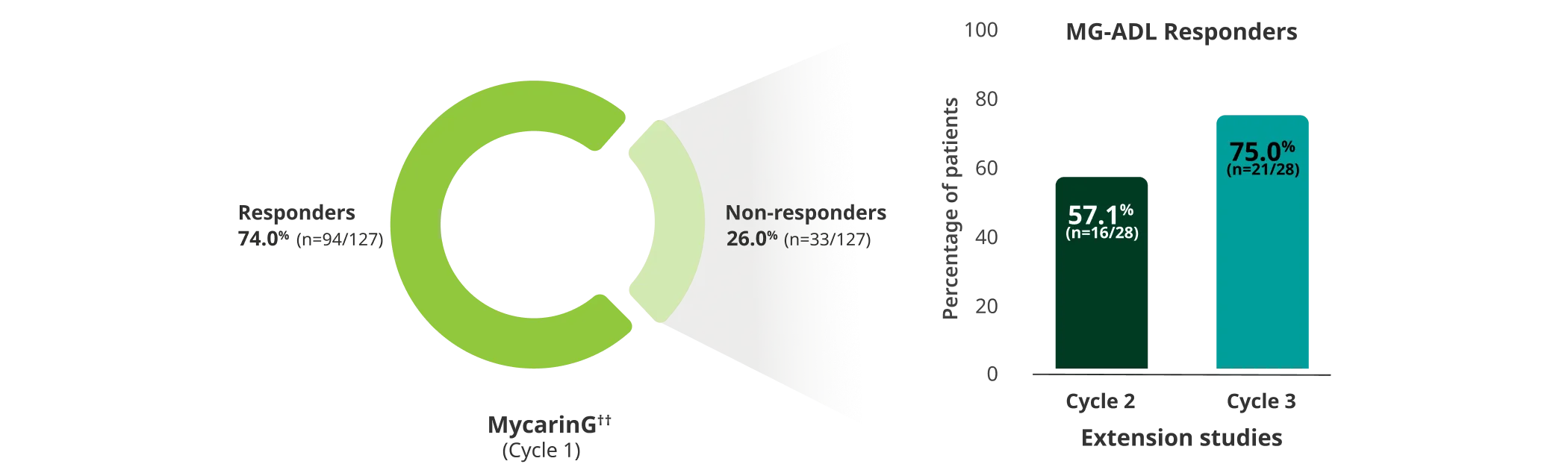
Interim analysis as of July 8, 2022.11
The RYSTIGGO extension studies were open label and not placebo controlled; therefore, the efficacy and clinical significance of the results should be interpreted with caution.
This data was from a post hoc analysis not controlled for multiplicity and not powered; therefore, data should be interpreted with caution and conclusions cannot be drawn.
Data were pooled across MycarinG, the first 6 weeks of MG0004, and MG0007 and combined for the 7 mg/kg and 10 mg/kg RYSTIGGO treatment groups.11
MG-ADL responder was defined as adults with a ≥2.0-point improvement in MG-ADL total score from baseline at Week 6 (Day 43).11
26.0% of patients were initial non-responders in the MycarinG pivotal study.11
Cycle 1 only included adults from the RYSTIGGO treatment groups in MycarinG.11
MINIMAL SYMPTOM EXPRESSION (MSE) IN EXTENSION STUDIES
MSE rates through subsequent cycles of RYSTIGGO10
Other efficacy endpoint: MSE6,10‡‡§§∥∥
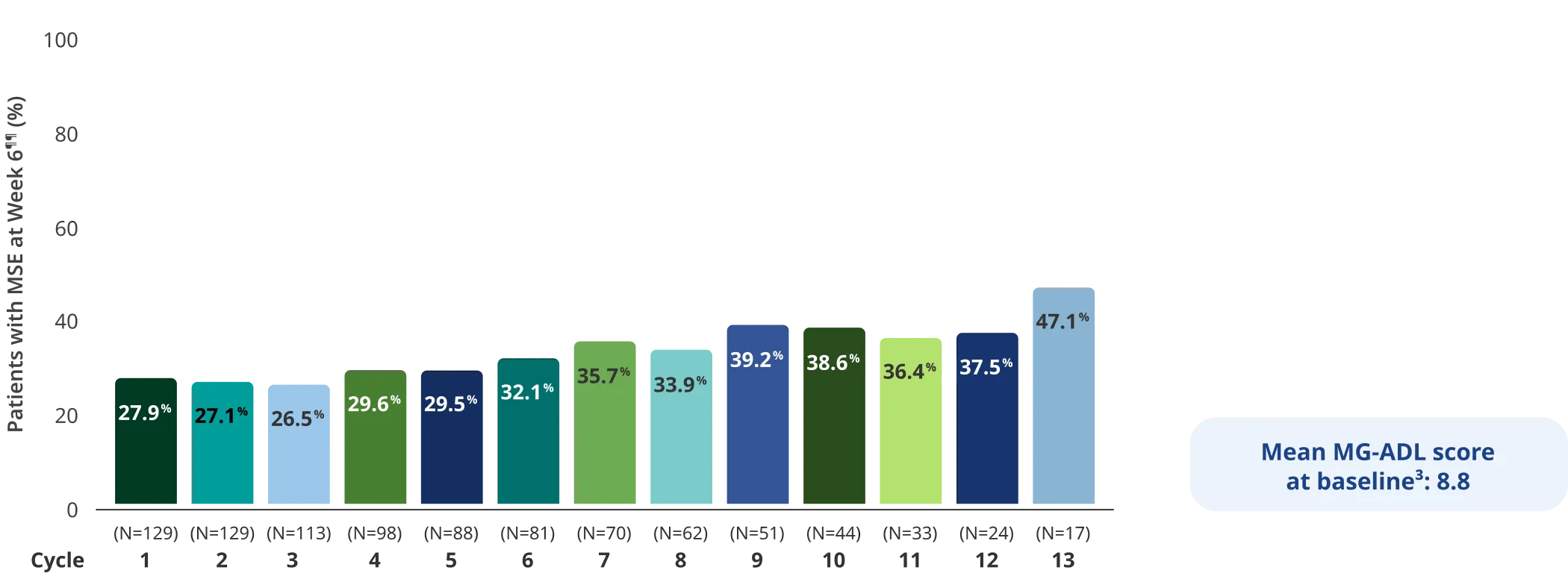
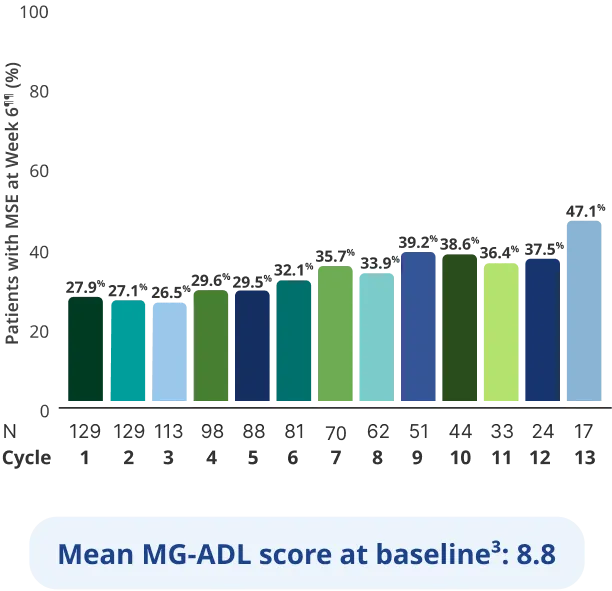
The RYSTIGGO extension studies were open label and not placebo controlled; therefore, the efficacy and clinical significance of the results should be interpreted with caution.
MSE was an other efficacy endpoint and not controlled for multiplicity. Therefore, data should be interpreted with caution and conclusions cannot be drawn.
Data should be interpreted with caution given the decreasing number of patients receiving subsequent treatment cycles.
Data were pooled across MycarinG, the first 6 weeks of MG0004, and MG0007 and combined for the 7 mg/kg and 10 mg/kg RYSTIGGO treatment groups.10
N represents the number of adults with MSE assessment in the efficacy pool at each treatment cycle.10
MSE was defined as an MG-ADL total score of 0 or 1 at any visit for each 6-week cycle and observation period without the use of rescue therapy during the extension studies.6,10
Day 43.
MYASTHENIA GRAVIS SYMPTOMS PATIENT-REPORTED OUTCOME (MG SYMPTOMS PRO) IN EXTENSION STUDIES
Change in gMG symptoms across subsequent cycles of RYSTIGGO in 3 domains of MG Symptoms PRO12:
Change in muscle weakness fatigability in adults receiving subsequent cycles of RYSTIGGO in the extension studies12
Other efficacy endpoint: Mean change in MG Symptoms PRO muscle weakness fatigability score from baseline to Week 6 (Day 43) over repeated cycles6,12##
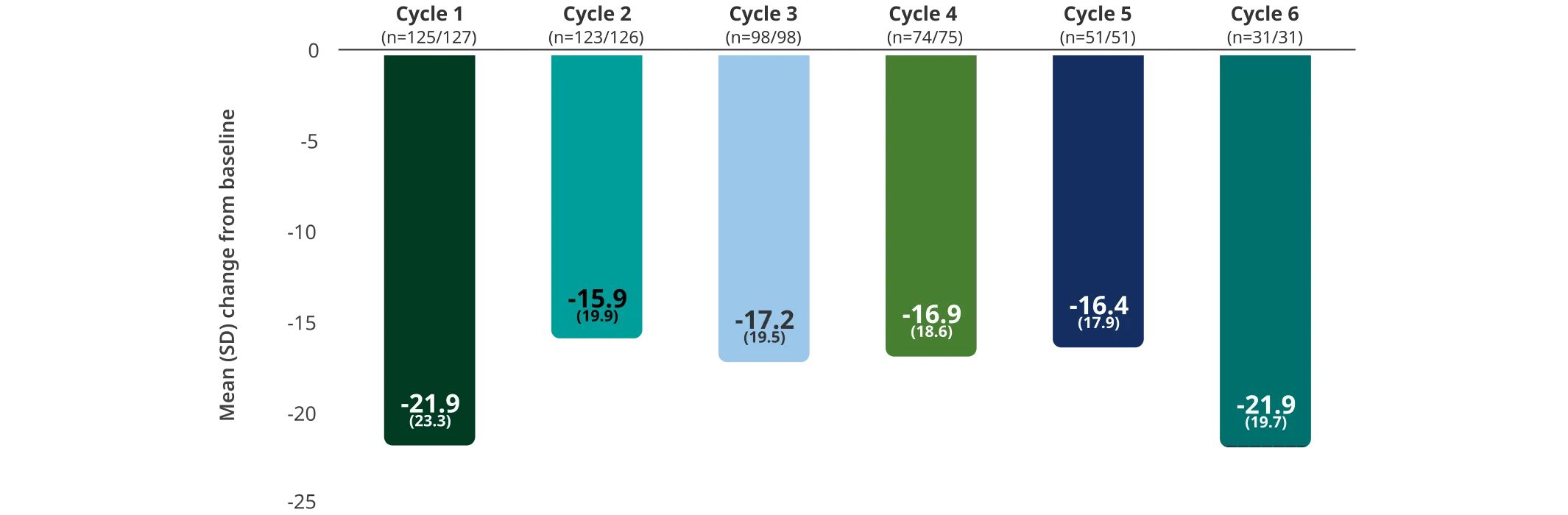
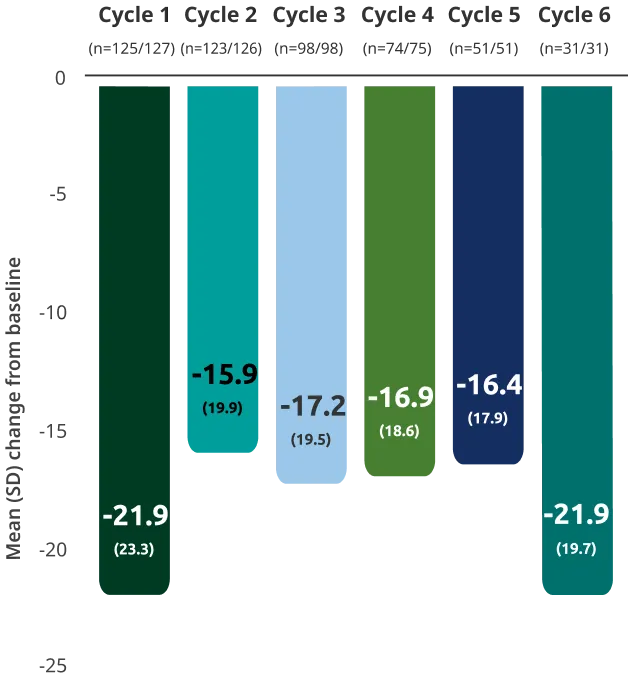
Interim analysis as of July 8, 2022.12
The RYSTIGGO extension studies were open label and not placebo controlled; therefore, the efficacy and clinical significance of the results should be interpreted with caution.
MG Symptoms PRO was an other efficacy endpoint and not controlled for multiplicity. Therefore, data should be interpreted with caution and conclusions cannot be drawn.
Data were pooled across MycarinG, the first 6 weeks of MG0004, and MG0007 and combined for the 7 mg/kg and 10 mg/kg RYSTIGGO treatment groups.12
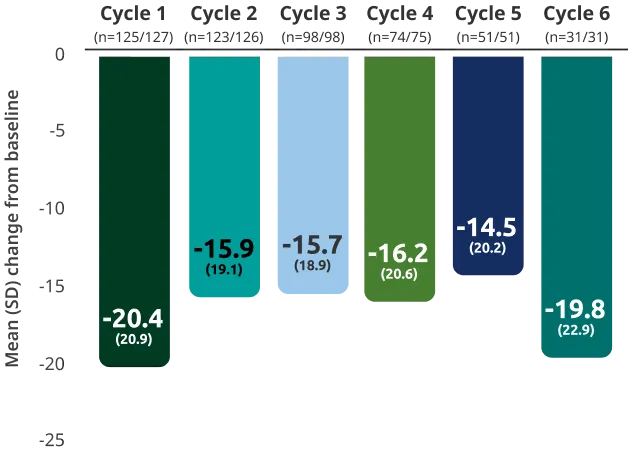
Change in physical fatigue in adults receiving subsequent cycles of RYSTIGGO in the extension studies12
Other efficacy endpoint: Mean change in MG Symptoms PRO physical fatigue score from baseline to Week 6 (Day 43) over repeated cycles6,12***
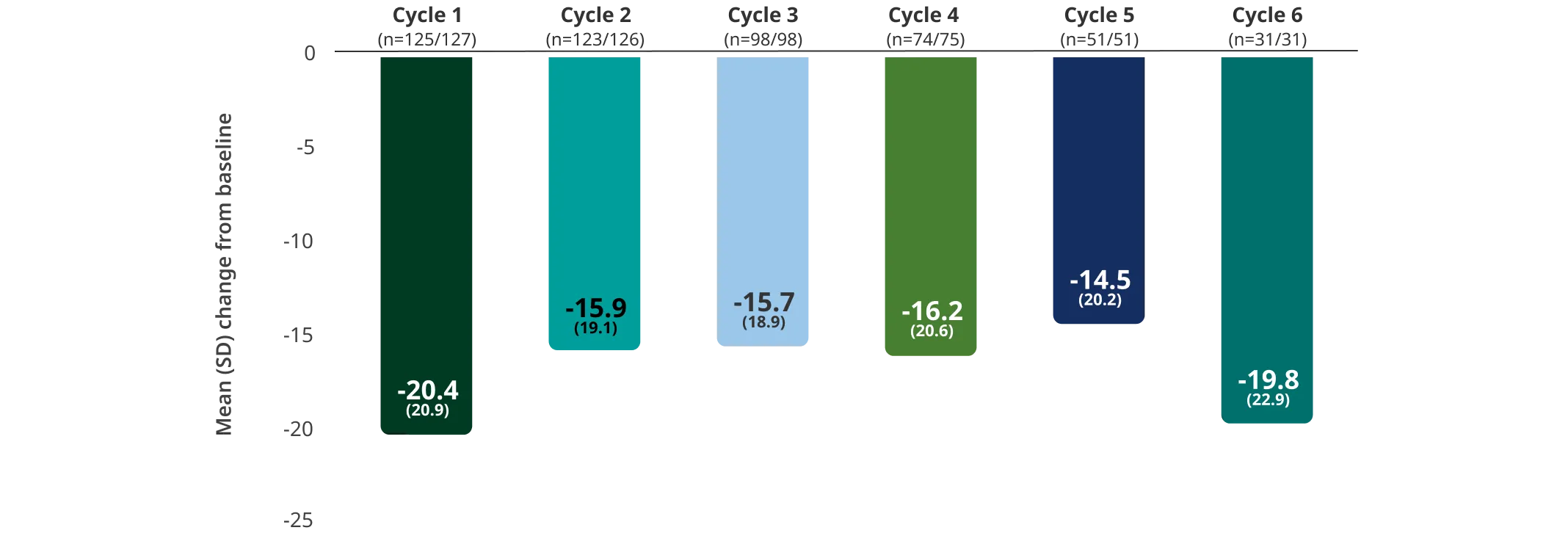
Interim analysis as of July 8, 2022.12
The RYSTIGGO extension studies were open label and not placebo controlled; therefore, the efficacy and clinical significance of the results should be interpreted with caution.
MG Symptoms PRO was an other efficacy endpoint and not controlled for multiplicity. Therefore, data should be interpreted with caution and conclusions cannot be drawn.
Data were pooled across MycarinG, the first 6 weeks of MG0004, and MG0007 and combined for the 7 mg/kg and 10 mg/kg RYSTIGGO treatment groups.12
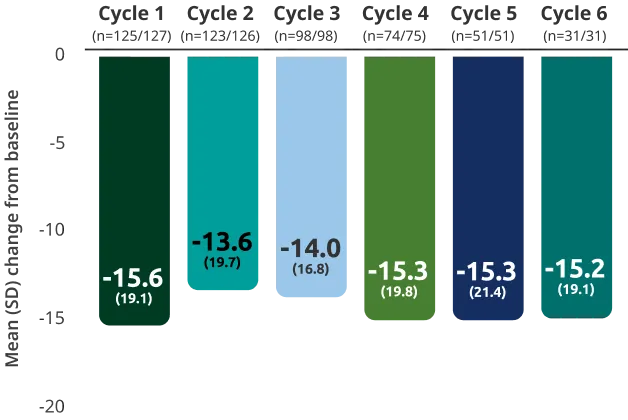
Change in bulbar muscle weakness in adults receiving subsequent cycles of RYSTIGGO in the extension studies12
Other efficacy endpoint: Mean change in MG Symptoms PRO bulbar muscle weakness score from baseline to Week 6 (Day 43) over repeated cycles6,12†††
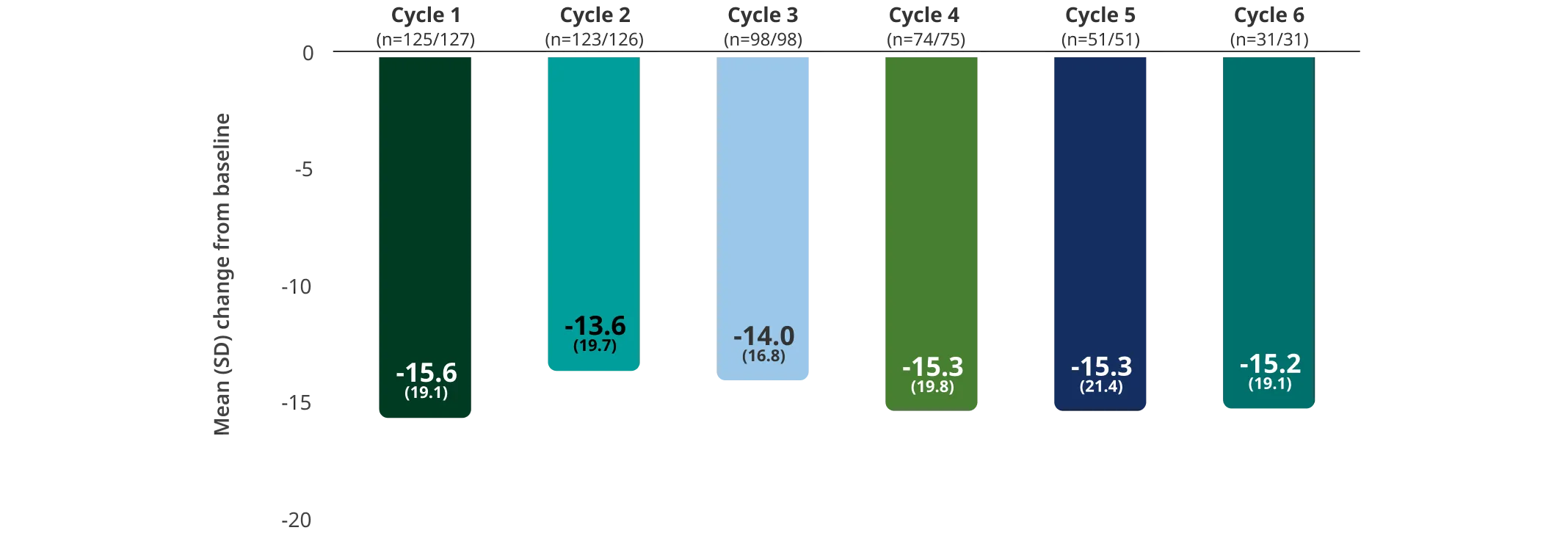
Interim analysis as of July 8, 2022.12
The RYSTIGGO extension studies were open label and not placebo controlled; therefore, the efficacy and clinical significance of the results should be interpreted with caution.
MG Symptoms PRO was an other efficacy endpoint and not controlled for multiplicity. Therefore, data should be interpreted with caution and conclusions cannot be drawn.
Data were pooled across MycarinG, the first 6 weeks of MG0004, and MG0007 and combined for the 7 mg/kg and 10 mg/kg RYSTIGGO treatment groups.12
MG Symptoms PRO is a novel outcome measure developed by UCB and used in the RYSTIGGO clinical trials. It complements established clinical outcome measures and is the first outcome measure to include a standalone assessment of physical fatigue.2,13,14
MG Symptoms PRO is a patient assessment evaluating the symptom severity of myasthenia gravis. Symptoms are measured over a 7-day period. A score ranging from 0-100 is calculated for each subscale, with a higher score indicating greater symptom severity.13
MG Symptoms PRO evaluates2,13:
Muscle weakness fatigability A scale that measures muscle fatigability by assessing use-induced reduction in the ability of the following muscles to function:
- Proximal
- Ocular
- Bulbar
- Respiratory
Physical fatigue A scale that measures the symptoms/manifestations of physical fatigue, including:
- Body and limb muscle weakness
- Heaviness
- Lack of energy and strength
Bulbar muscle weakness A scale that measures the symptoms/manifestations associated with bulbar muscle weakness, including:
- Facial/mouth drooping
- Speech and voice problems
- Difficulties with chewing and swallowing
- Liquid control in mouth
TREATMENT BREAKS IN EXTENSION STUDIES
Majority of adults had treatment breaks between 4 and <8 weeks3
Secondary endpoint: Time to subsequent symptom-driven treatment cycle from last subcutaneous infusion3,6‡‡‡
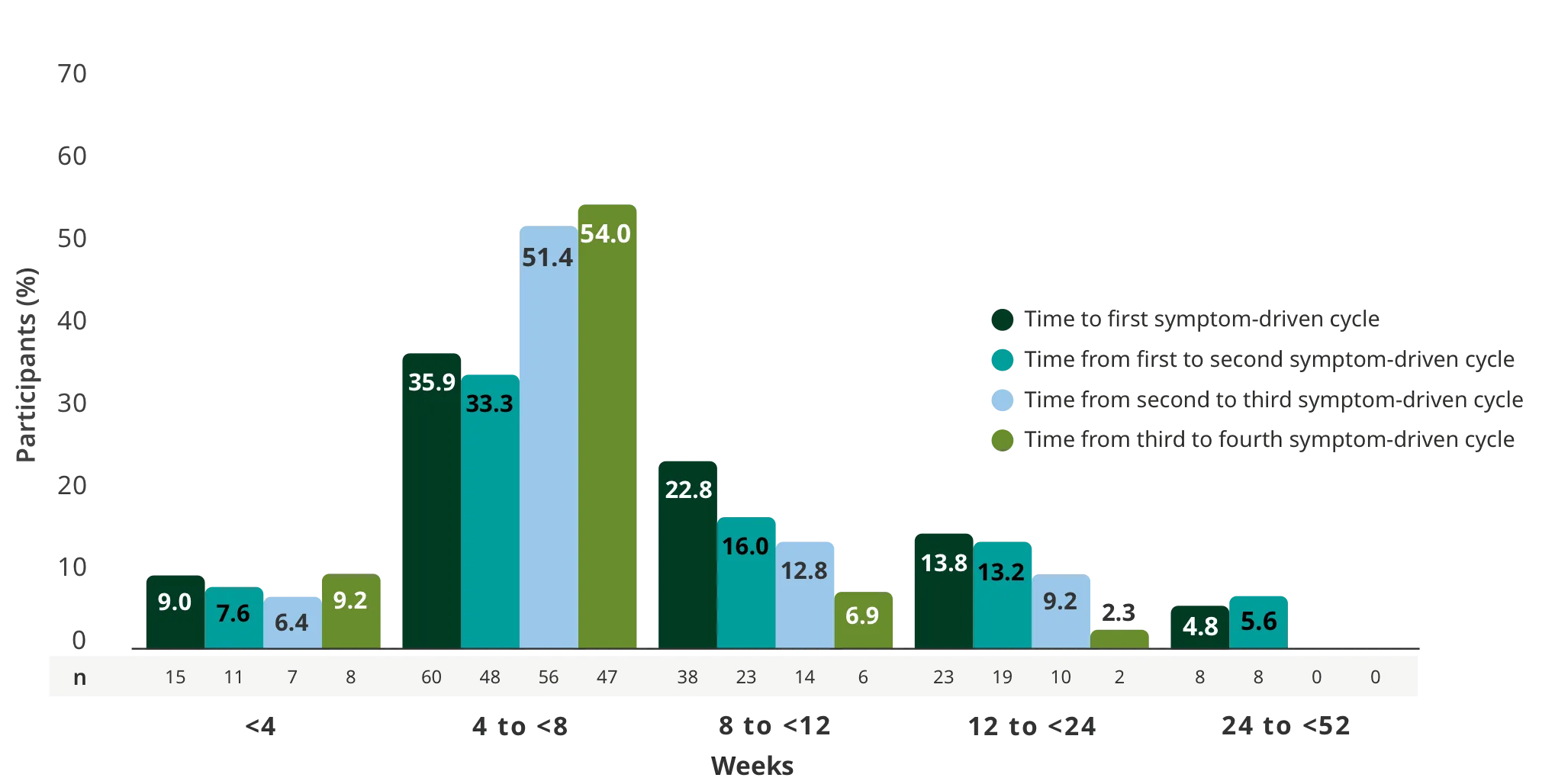
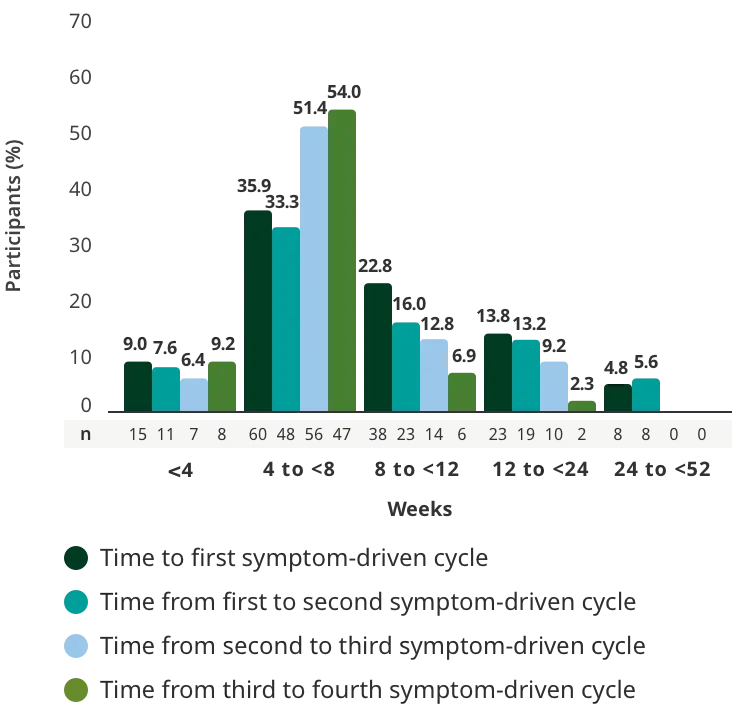
Interim analysis as of July 8, 2022.3
- The median time between treatment cycles was 8 weeks for adults treated with RYSTIGGO who initiated 4 cycles1§§§
- The safety of initiating subsequent cycles sooner than 9 weeks (6-week treatment period and a 4-week follow-up period) from the start of the previous treatment cycle has not been established1,8
- The most common adverse reactions being observed with repeated cyclic treatment were consistent with adverse reactions observed in the pivotal study1,6
The RYSTIGGO extension studies were open label and not placebo controlled; therefore, the efficacy and clinical significance of the results should be interpreted with caution.
Data were pooled across MycarinG, the first 6 weeks of MG0004, and MG0007 and combined for the 7 mg/kg and 10 mg/kg RYSTIGGO treatment groups.3
This is equivalent to 14 weeks from the start of the previous treatment cycle.1
Learn more about RYSTIGGO flexible dosing with individualized breaks between treatment cycles
Ab+=antibody positive; AChR=acetylcholine receptor; COVID-19=coronavirus disease 2019; CS=corticosteroid; gMG=generalized myasthenia gravis; IgG=immunoglobulin G; MG-ADL=Myasthenia Gravis Activities of Daily Living; MGC=Myasthenia Gravis Composite; MGSPRO=Myasthenia Gravis Symptoms Patient-Reported Outcome; MuSK=muscle-specific tyrosine kinase; QMG=Quantitative Myasthenia Gravis; SD=standard deviation.
References:
- RYSTIGGO [Prescribing Information]. Smyrna, GA: UCB, Inc.
- Bril V, Drużdż A, Grosskreutz J, et al. Safety and efficacy of rozanolixizumab in patients with generalised myasthenia gravis (MycarinG): a randomised, double-blind, placebo-controlled, adaptive phase 3 study. Lancet Neurol. 2023;22(5):383-394. doi:10.1016/S1474-4422(23)00077-7
- Bril V, Drużdż A, Grosskreutz J, et al. Rozanolixizumab in generalized myasthenia gravis: pooled analysis of the phase 3 MycarinG study and two open-label extensions. J Neuromuscul Dis. 2025;12(2):218-230. doi:10.1177/22143602241305511
- A study to investigate the long-term safety, tolerability, and efficacy of rozanolixizumab in adult patients with generalized myasthenia gravis. ClinicalTrials.gov identifier: NCT04124965. Updated September 5, 2023. Accessed July 20, 2026. https://clinicaltrials.gov/study/NCT04124965
- A study to evaluate rozanolixizumab in study participants with generalized myasthenia gravis. ClinicalTrials.gov identifier: NCT04650854. Updated April 18, 2025. Accessed July 20, 2026. https://clinicaltrials.gov/study/NCT04650854
- Data on file. UCB, Inc., Smyrna, GA.
- Habib AA, Antozzi C, Drużdż A, et al. Efficacy and safety of rozanolixizumab treatment cycles in patients with generalised myasthenia gravis: final pooled analysis of phase 3 studies. Poster presented at: MGFA International 2025; May 13-15, 2025; The Hague, Netherlands. Poster 71.
- UCB, Inc. RYSTIGGO [BLA 761286]. U.S. Food and Drug Administration. Updated May 25, 2022. Accessed March 25, 2026. https://www.accessdata.fda.gov/drugsatfda_docs/nda/2023/761286Orig1s000IntegratedR.pdf
- MG activities of daily living (MG-ADL) profile. Myasthenia Gravis Foundation of America. 1997. Accessed July 20, 2026. https://myasthenia.org/Portals/0/ADL.pdf
- Vu T, Antozzi C, Drużdż A, et al. Responder and minimal symptom expression rates with rozanolixizumab in generalised myasthenia gravis: final pooled analysis of phase 3 studies. Poster presented at: MGFA International 2025; May 13-15, 2025; The Hague, Netherlands. Poster 206.
- Pascuzzi RM, Grosskreutz J, Habib AA, et al. Response to rozanolixizumab across treatment cycles in patients with generalized myasthenia gravis: a post hoc analysis. Poster presented at: AAN 2024; April 13-18, 2024; Denver, CO. Poster P10-11-005.
- Habib AA, Kaminski HJ, Vissing J, et al. Patient-reported outcomes during repeated cycles of rozanolixizumab treatment in patients with generalized myasthenia gravis in the phase 3 MycarinG and open-label extension studies. Poster presented at: MGFA Scientific Session 2023; November 1, 2023; Phoenix, AZ. Poster 21.
- Regnault A, Morel T, de la Loge C, et al. Measuring overall severity of myasthenia gravis (MG): evidence for the added value of the MG Symptoms PRO. Neurol Ther. 2023;12(5):1573-1590. doi:10.1007/s40120-023-00464-x
- Cleanthous S, Mork AC, Regnault A, et al. Development of the Myasthenia Gravis (MG) Symptoms PRO: a case study of a patient-centred outcome measure in rare disease. Orphanet J Rare Dis. 2021;16(1):1-14. doi:10.1186/s13023-021-02064-0
The efficacy of RYSTIGGO for the treatment of adults with anti-AChR Ab+ and anti-MuSK Ab+ gMG was established in an up to 18-week, multicenter, randomized, double-blind, placebo-controlled study. In the study, 200 patients were randomized 1:1:1 to receive weight-tiered doses of RYSTIGGO (n=133), either 7 mg/kg of RYSTIGGO (n=66) or 10 mg/kg of RYSTIGGO (n=67), or placebo (n=67). A subgroup analysis was performed evaluating adults with anti-MuSK Ab+ gMG.1,3
MG-ADL IN ANTI-MuSK Ab+ ADULTS
The first treatment indicated for adults with anti-MuSK Ab+ gMG1
Subgroup analysis of the primary efficacy endpoint: Mean change from baseline to Week 6 (Day 43) in MG-ADL total score in adults with anti–MuSK Ab+ gMG3
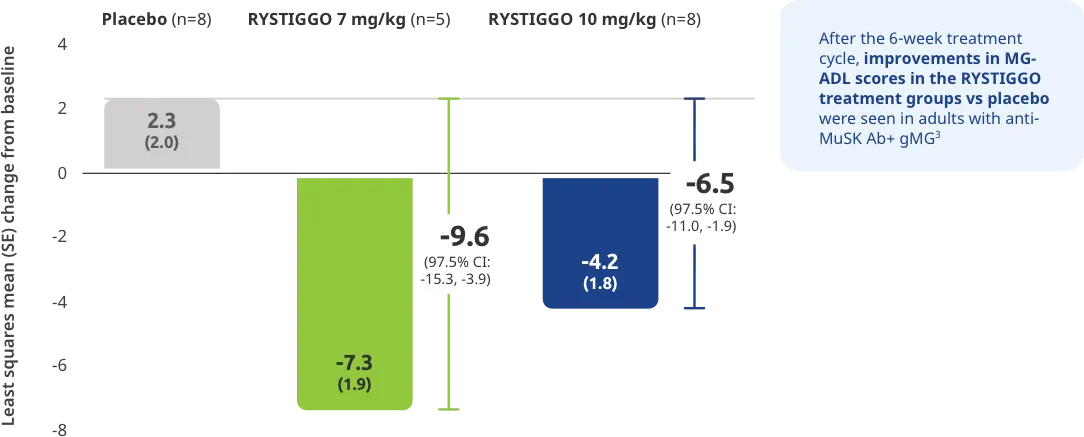
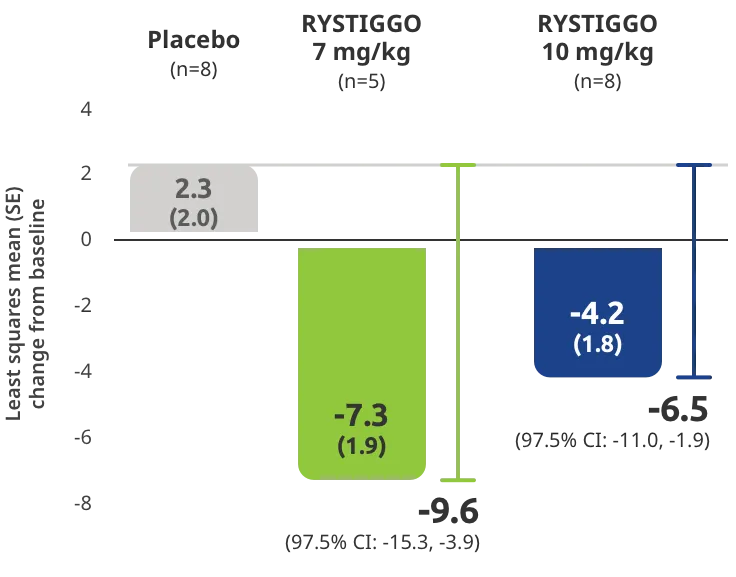
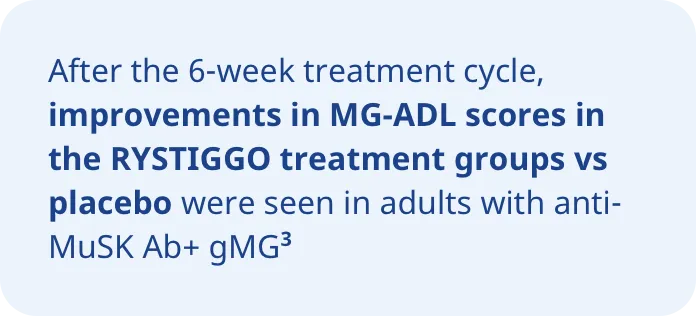
All subgroup analyses were descriptive.3
MG-ADL assesses the impact of gMG on daily functions of 8 symptoms on a scale of 0-3, with total scores ranging from 0-24. Higher scores are interpreted as greater impairments. An improvement of ≥2.0 points was established as clinically meaningful.1,2
Measures include4:
- Voice/speech problems
- Chewing
- Swallowing
- Breathing
- Brushing teeth and/or combing hair
- Rising from a chair
- Diplopia
- Eyelid droop
MG-ADL RESPONDER RATE IN ANTI-MuSK Ab+ ADULTS
All adults with anti-MuSK Ab+ gMG who received RYSTIGGO and had data available at Week 6 were MG-ADL responders2
Subgroup analysis of MG-ADL responder rate (secondary endpoint): Adults with anti-MuSK Ab+ gMG with a ≥2.0-point reduction in MG-ADL total score from baseline at Week 6 (Day 43)2,3
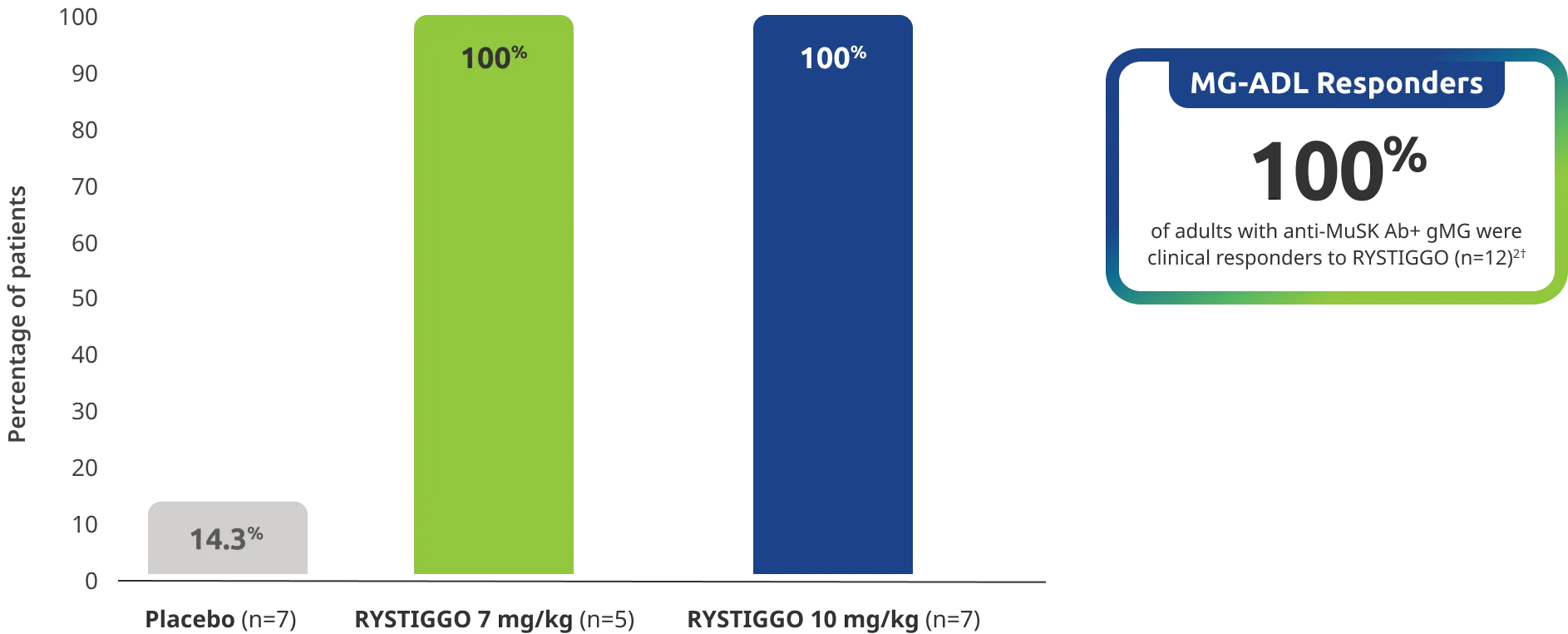
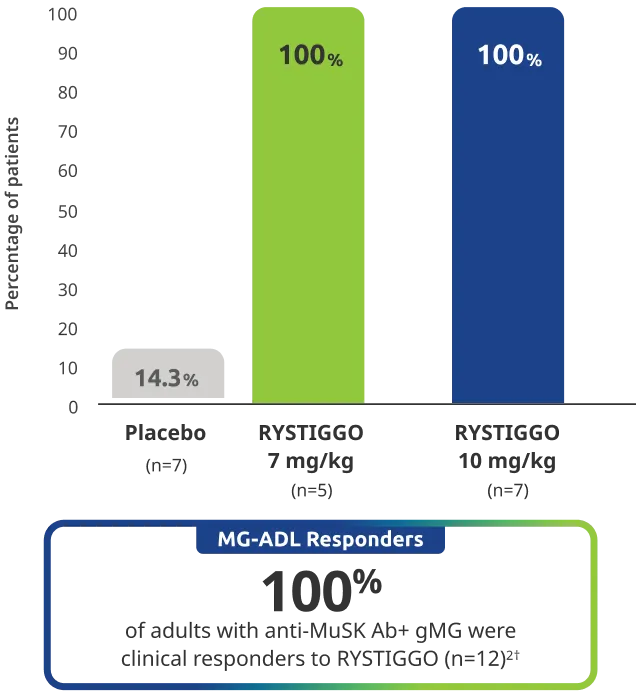
All subgroup analyses were descriptive.3
Study limitations: MG-ADL responder rate was a prespecified secondary endpoint not controlled for multiplicity; therefore, data should be interpreted with caution and conclusions cannot be drawn.
Clinical responders were established as adults with a ≥2.0-point improvement in the total MG‑ADL score compared to baseline at Week 6 (Day 43). Clinical responder data were not collected for one patient in the RYSTIGGO 10 mg/kg group who discontinued treatment.2,5
MINIMAL SYMPTOM EXPRESSION (MSE) IN ANTI-MuSK Ab+ ADULTS
MSE rates observed in adults with anti-MuSK Ab+ gMG during the pivotal study3
Subgroup analysis of MSE (other efficacy endpoint)3‡
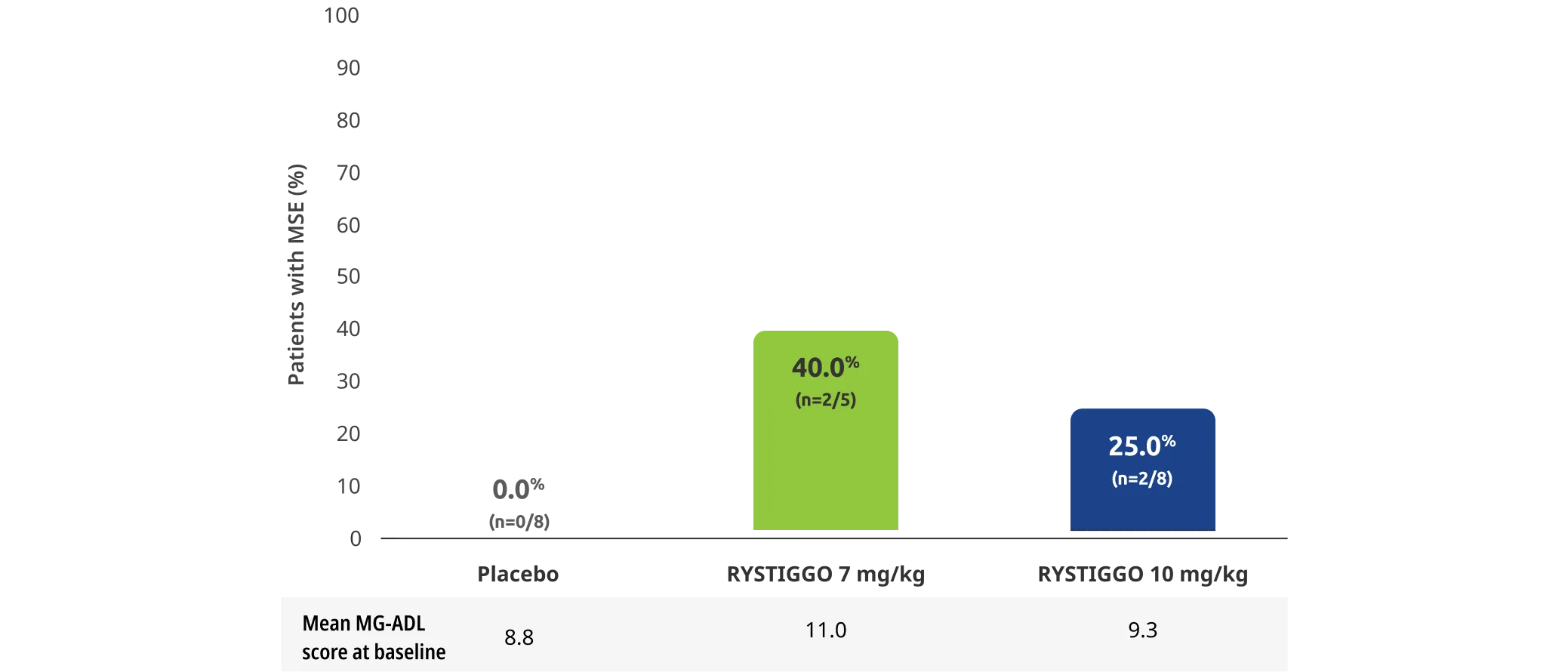
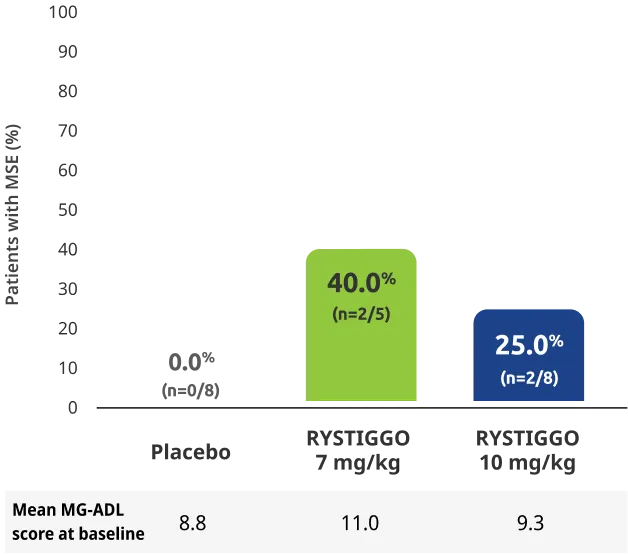
All subgroup analyses were descriptive.3
MSE was an other efficacy endpoint and not controlled for multiplicity. Therefore, data should be interpreted with caution and conclusions cannot be drawn.
MSE was defined as an MG-ADL total score of 0 or 1 at any time up to and including Week 6 (Day 43) of the pivotal study.3
MYASTHENIA GRAVIS SYMPTOMS PATIENT-REPORTED OUTCOME (MG SYMPTOMS PRO) IN ANTI-MuSK Ab+ ADULTS
MG Symptoms PRO evaluated gMG symptoms across 3 domains3:
Improvement in muscle weakness fatigability demonstrated in adults with anti-MuSK Ab+ gMG taking RYSTIGGO at Week 63
Subgroup analysis of MG Symptoms PRO (secondary endpoint): Mean change in MG Symptoms PRO muscle weakness fatigability score from baseline to Week 6 (Day 43) in adults with anti-MuSK Ab+ gMG3
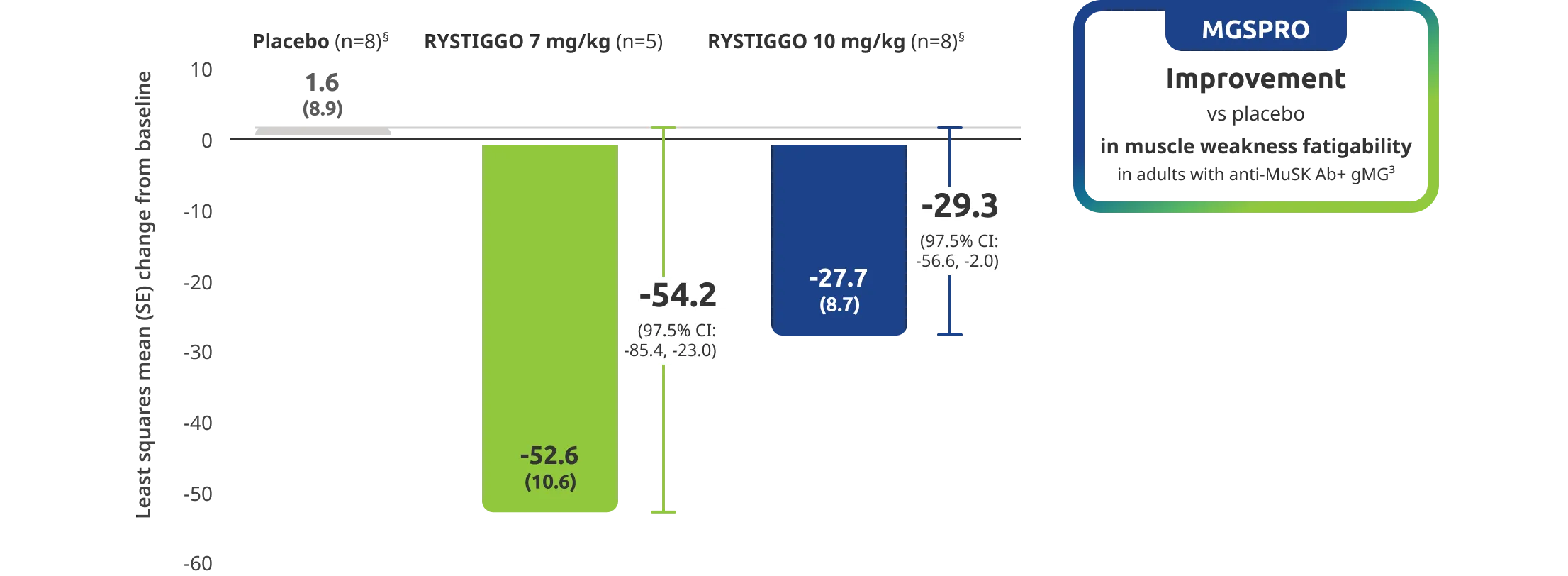
All subgroup analyses were descriptive.3
MG Symptoms PRO was part of the planned efficacy analysis; however, efficacy or clinical significance should be interpreted with caution.
Includes 1 patient who had a documented history of both MuSK and AChR autoantibodies.3
Improvement in physical fatigue demonstrated in adults with anti-MuSK Ab+ gMG taking RYSTIGGO at Week 63
Subgroup analysis of MG Symptoms PRO (secondary endpoint): Mean change in MG Symptoms PRO physical fatigue score from baseline to Week 6 (Day 43) in adults with anti-MuSK Ab+ gMG3
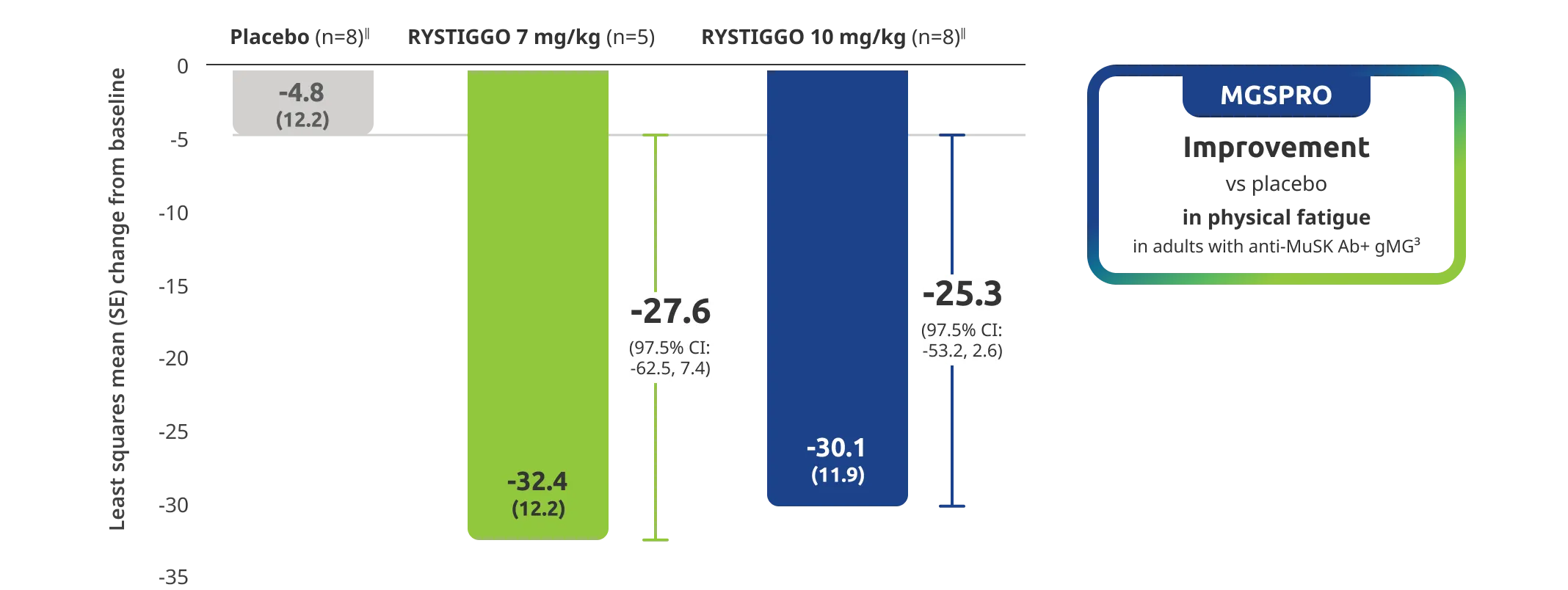
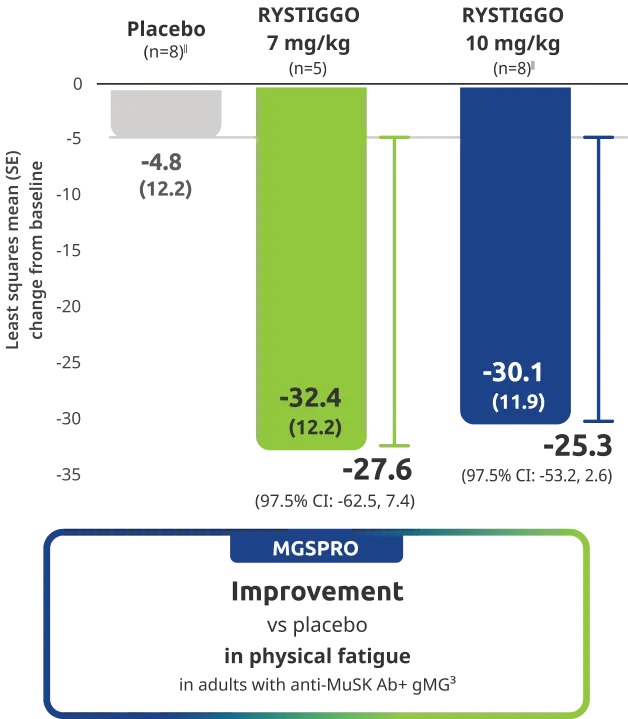
All subgroup analyses were descriptive.3
MG Symptoms PRO was part of the planned efficacy analysis; however, efficacy or clinical significance should be interpreted with caution.
Includes 1 patient who had a documented history of both MuSK and AChR autoantibodies.3
Improvement in bulbar muscle weakness demonstrated in adults with anti-MuSK Ab+ gMG taking RYSTIGGO at Week 63
Subgroup analysis of MG Symptoms PRO (secondary endpoint): Mean change in MG Symptoms PRO bulbar muscle weakness score from baseline to Week 6 (Day 43) in adults with anti-MuSK Ab+ gMG3
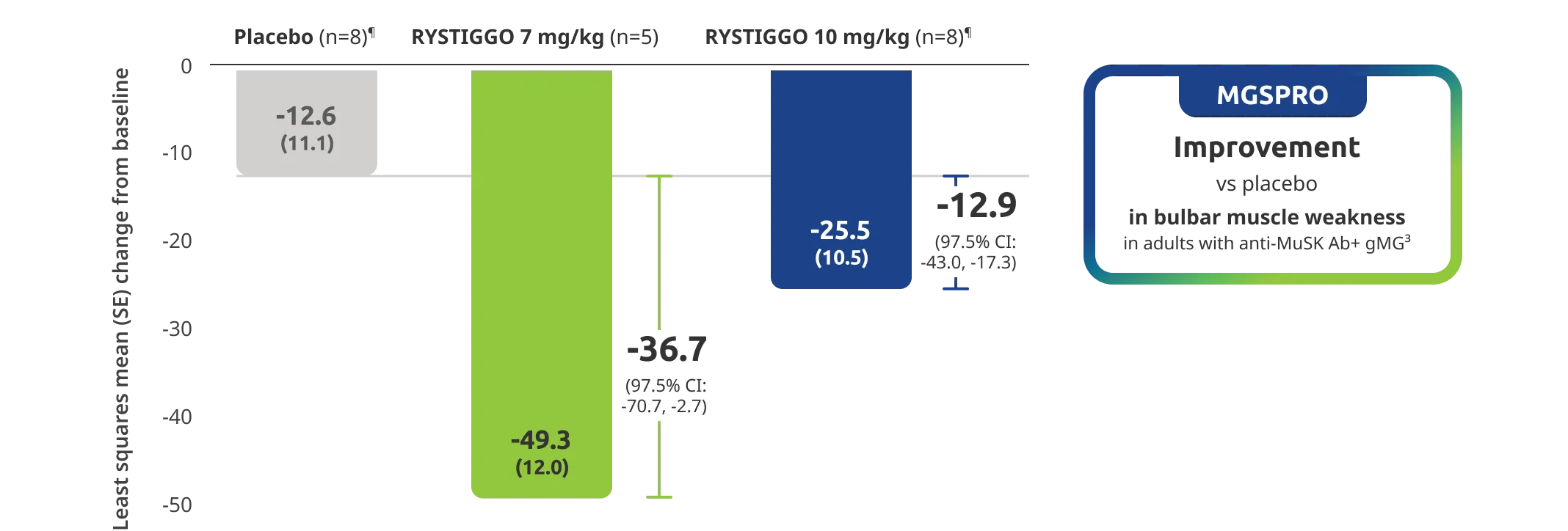
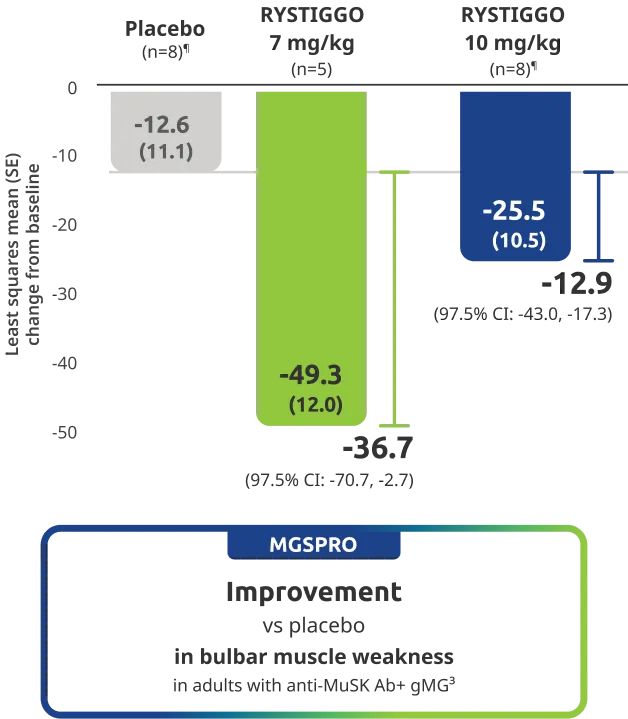
All subgroup analyses were descriptive.3
MG Symptoms PRO was part of the planned efficacy analysis; however, efficacy or clinical significance should be interpreted with caution.
Includes 1 patient who had a documented history of both MuSK and AChR autoantibodies.3
MG SYMPTOMS PRO OUTCOME MEASURE
MG Symptoms PRO is a novel outcome measure developed by UCB and used in the RYSTIGGO clinical trials. It complements established clinical outcome measures and is the first outcome measure to include a standalone assessment of physical fatigue.2,6,7
MG Symptoms PRO is a patient assessment evaluating the symptom severity of myasthenia gravis. Symptoms are measured over a 7-day period. A score ranging from 0-100 is calculated for each subscale, with a higher score indicating greater symptom severity.6
MG Symptoms PRO evaluates2,6:
Muscle weakness fatigability
A scale that measures muscle fatigability by assessing use-induced reduction in the ability of the following muscles to function:
- Proximal
- Ocular
- Bulbar
- Respiratory
Physical fatigue
A scale that measures the symptoms/manifestations of physical fatigue, including:
- Body and limb muscle weakness
- Heaviness
- Lack of energy and strength
Bulbar muscle weakness
A scale that measures the symptoms/manifestations associated with bulbar muscle weakness, including:
- Facial/mouth drooping
- Speech and voice problems
- Difficulties with chewing and swallowing
- Liquid control in mouth
MG-ADL RESPONDER RATES IN ANTI-MuSK Ab+ ADULTS IN EXTENSION STUDIES
MG-ADL responder rates across subsequent cycles of RYSTIGGO in anti-MuSK Ab+ adults in the extension studies8
Subgroup analysis of MG-ADL responder rates (other efficacy endpoint) in extension studies5,8#
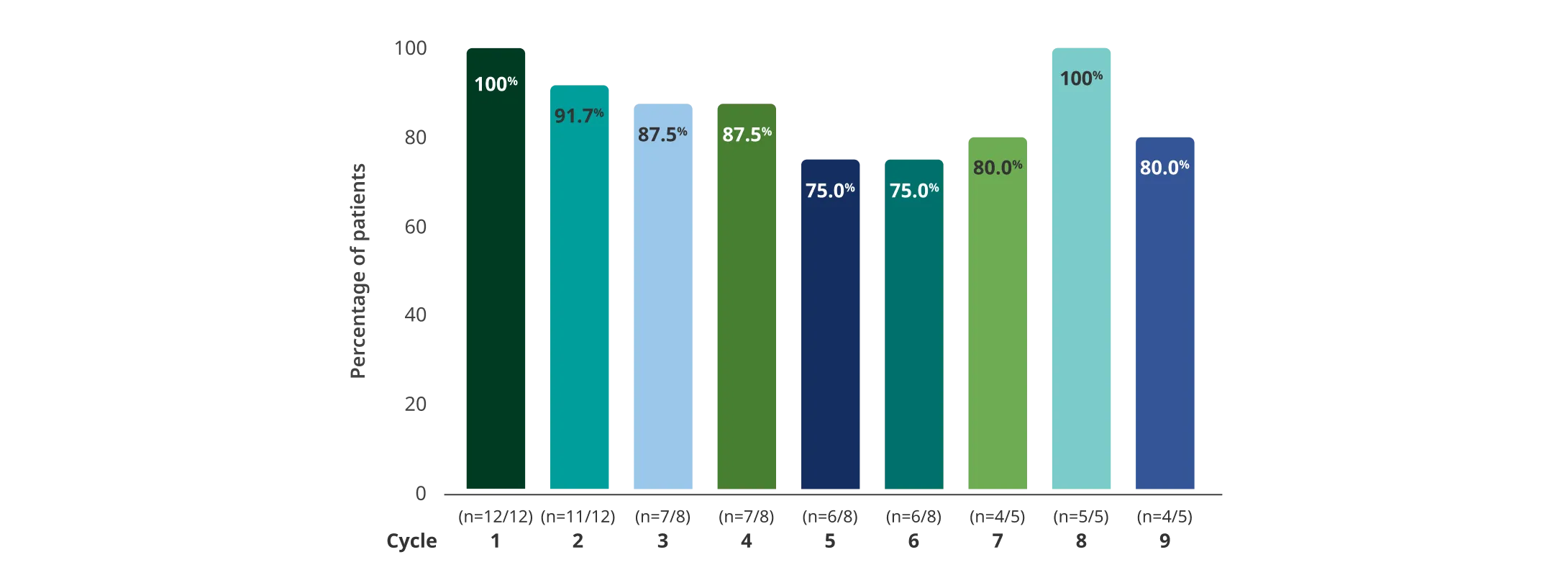
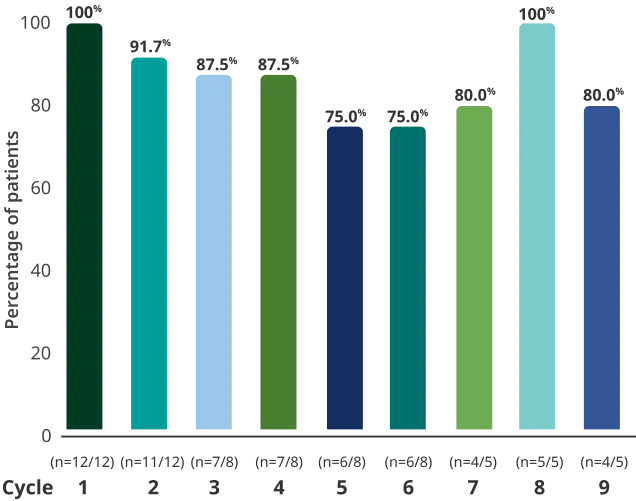
MG-ADL responder rate was defined as the proportion of adults with a ≥2.0-point reduction in MG-ADL total score from baseline at Week 6 (Day 43) without the use of rescue therapy.8
The RYSTIGGO extension studies were open label and not placebo controlled; therefore, the efficacy and clinical significance of the results should be interpreted with caution.
Data were pooled across MycarinG, the first 6 weeks of MG0004, and MG0007 and combined for the 7 mg/kg and 10 mg/kg RYSTIGGO treatment groups.8
Ab+=antibody positive; AChR=acetylcholine receptor; CI=confidence interval; gMG=generalized myasthenia gravis; IgG=immunoglobulin G; MG-ADL=Myasthenia Gravis Activities of Daily Living; MGC=Myasthenia Gravis Composite; MGSPRO=Myasthenia Gravis Symptoms Patient-Reported Outcome; MuSK=muscle-specific tyrosine kinase; QMG=Quantitative Myasthenia Gravis; SE=standard error.
References:
- RYSTIGGO [Prescribing Information]. Smyrna, GA: UCB, Inc.
- Bril V, Drużdż A, Grosskreutz J, et al. Safety and efficacy of rozanolixizumab in patients with generalised myasthenia gravis (MycarinG): a randomised, double-blind, placebo-controlled, adaptive phase 3 study. Lancet Neurol. 2023;22(5):383-394. doi:10.1016/S1474-4422(23)00077-7
- Habib AA, Sacconi S, Antonini G, et al. Efficacy and safety of rozanolixizumab in patients with muscle-specific tyrosine kinase autoantibody-positive generalised myasthenia gravis: a subgroup analysis of the randomised, double-blind, placebo-controlled, adaptive phase III MycarinG study. Ther Adv Neurol Disord. 2024;17:17562864241273036. doi:10.1177/17562864241273036
- MG activities of daily living (MG-ADL) profile. Myasthenia Gravis Foundation of America. 1997. Accessed July 20, 2026. https://myasthenia.org/Portals/0/ADL.pdf
- Data on file. UCB, Inc., Smyrna, GA.
- Regnault A, Morel T, de la Loge C, et al. Measuring overall severity of myasthenia gravis (MG): evidence for the added value of the MG Symptoms PRO. Neurol Ther. 2023;12(5):1573-1590. doi:10.1007/s40120-023-00464-x
- Cleanthous S, Mork AC, Regnault A, et al. Development of the Myasthenia Gravis (MG) Symptoms PRO: a case study of a patient-centred outcome measure in rare disease. Orphanet J Rare Dis. 2021;16(1):1-14. doi:10.1186/s13023-021-02064-0
- Habib AA, Drużdż A, Lange DJ, et al. Repeated cycles of rozanolixizumab treatment in patients with anti-muscle-specific tyrosine kinase antibody-positive generalized myasthenia gravis. Poster presented at: MGFA Scientific Session at AANEM 2025; October 29, 2025; San Francisco, CA. Poster 36.