

TREATMENT GOALS
Each patient with generalized myasthenia gravis (gMG) is unique, as are their treatment goals1,2
Actor portrayal.
Each patient with generalized myasthenia gravis (gMG) is unique, as are their treatment goals1,2

Treatment goals for patients with gMG
Patient treatment goals center around symptom management1:
- Reduction in fatigue or weakness
- Consistent control of disease manifestations
- Ability to return to former activities
- Remission or cure

Evaluating treatment response

Patient-reported outcome measures, like the Myasthenia Gravis Activities of Daily Living (MG-ADL) outcome measure, can help patients keep track of their symptoms, measure treatment progress and response, and facilitate a dialogue between you and your patients to improve quality of care and help them reach their treatment goals.3
MG-ADL Outcome Measure
MG-ADL is a patient-reported outcome measure that evaluates 8 activities of daily living3,4:
- Talking
- Chewing
- Swallowing
- Breathing
- Brushing teeth or combing hair
- Rising from a chair
- Diplopia
- Eyelid droop
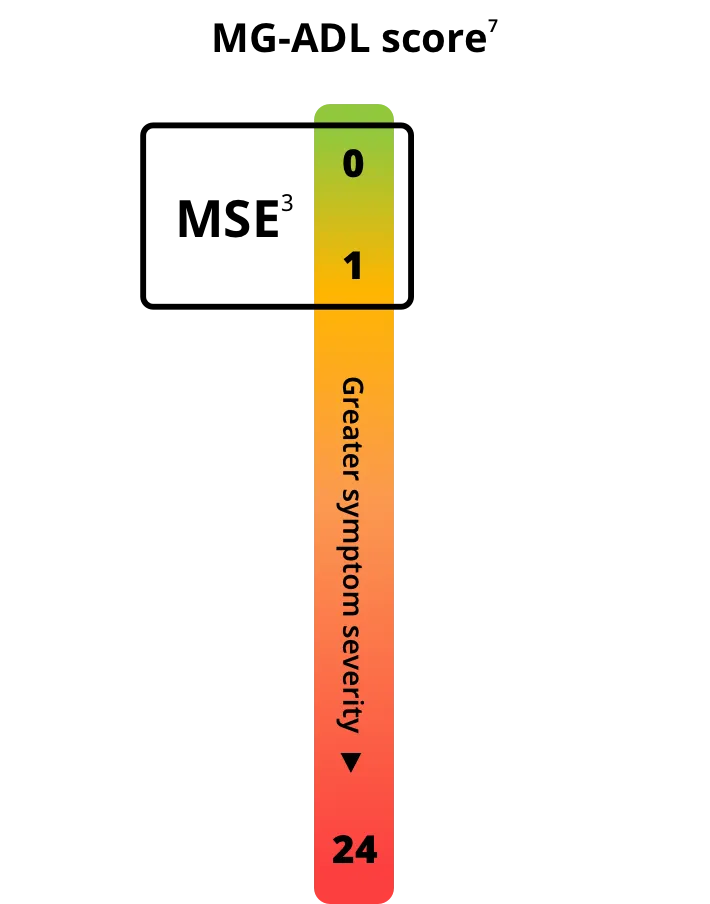
Each symptom is evaluated on a scale of 0-3, with total scores ranging from 0-24. A higher score indicates greater symptom severity.3,5
Give your patients a tool to help them track their progress and communicate their symptoms with you.
Minimal Symptom Expression: a new treatment goal for gMG6
Minimal Symptom Expression (MSE) has become a treatment goal for patients with gMG in recent years.6
MSE is defined as an MG-ADL score of 0 or 1 and is a useful tool to measure treatment effectiveness.3

References:
- Jackson K, Parthan A, Lauher-Charest M, et al. Understanding the symptom burden and impact of myasthenia gravis from the patient's perspective: a qualitative study. Neurol Ther. 2023;12(1):107-128. doi:10.1007/s40120-022-00408-x
- MG treatment overview. Myasthenia Gravis Foundation of America. Accessed July 20, 2026. https://myasthenia.org/Treatments/Treatment-Overview
- Muppidi S, Silvestri NJ, Tan R, et al. Utilization of MG-ADL in myasthenia gravis clinical research and care. Muscle Nerve. 2022;65(6):630-639. doi:10.1002/mus.27476
- MG activities of daily living (MG-ADL) profile. Myasthenia Gravis Foundation of America. 1997. Accessed July 20, 2026. https://myasthenia.org/Portals/0/ADL.pdf
- Dewilde S, Janssen MF, Tollenaar NH, et al. Concordance between patient- and physician-reported Myasthenia Gravis Activities of Daily Living (MG-ADL) scores. Muscle Nerve. 2023;68(1):65-72. doi:10.1002/mus.27837
- Uzawa A, Ozawa Y, Yasuda M, et al. Minimal symptom expression achievement over time in generalized myasthenia gravis. Acta Neurol Belg. 2023;123(3):979-982. doi:10.1007/s13760-022-02162-1
- Regnault A, Morel T, de la Loge C, et al. Measuring overall severity of myasthenia gravis (MG): evidence for the added value of the MG Symptoms PRO. Neurol Ther. 2023:12(5):1573-1590. doi:10.1007/s40120-023-00464-x